



NEW YORK (AP) — A controversial bid to deter states from regulating artificial intelligence for a decade seemed on its way to passing as the Republican tax cut and spending bill championed by President Donald Trump worked its way through the U.S. Senate.
But as the bill neared a final vote, a relentless campaign against it by a constellation of conservatives — including Republican governors, lawmakers, think tanks and social groups — had been eroding support. One, conservative activist Mike Davis, appeared on the show of right-wing podcaster Steve Bannon, urging viewers to call their senators to reject this “AI amnesty” for “trillion-dollar Big Tech monopolists.”
He said he also texted with Trump directly, advising the president to stay neutral on the issue despite what Davis characterized as significant pressure from White House AI czar David Sacks, Commerce Secretary Howard Lutnick, Texas Sen. Ted Cruz and others.
Conservatives passionate about getting rid of the provision had spent weeks fighting others in the party who favored the legislative moratorium because they saw it as essential for the country to compete against China in the race for AI dominance. The schism marked the latest and perhaps most noticeable split within the GOP about whether to let states continue to put guardrails on emerging technologies or minimize such interference.
In the end, the advocates for guardrails won, revealing the enormous influence of a segment of the Republican Party that has come to distrust Big Tech. They believe states must remain free to protect their citizens against potential harms of the industry, whether from AI, social media or emerging technologies.
“Tension in the conservative movement is palpable,” said Adam Thierer of the R Street Institute, a conservative-leaning think tank. Thierer first proposed the idea of the AI moratorium last year. He noted “the animus surrounding Big Tech” among many Republicans.
“That was the differentiating factor.”
Conservative v. conservative in a last-minute fight
The Heritage Foundation, children’s safety groups and Republican state lawmakers, governors and attorneys general all weighed in against the AI moratorium. Democrats, tech watchdogs and some tech companies opposed it, too.
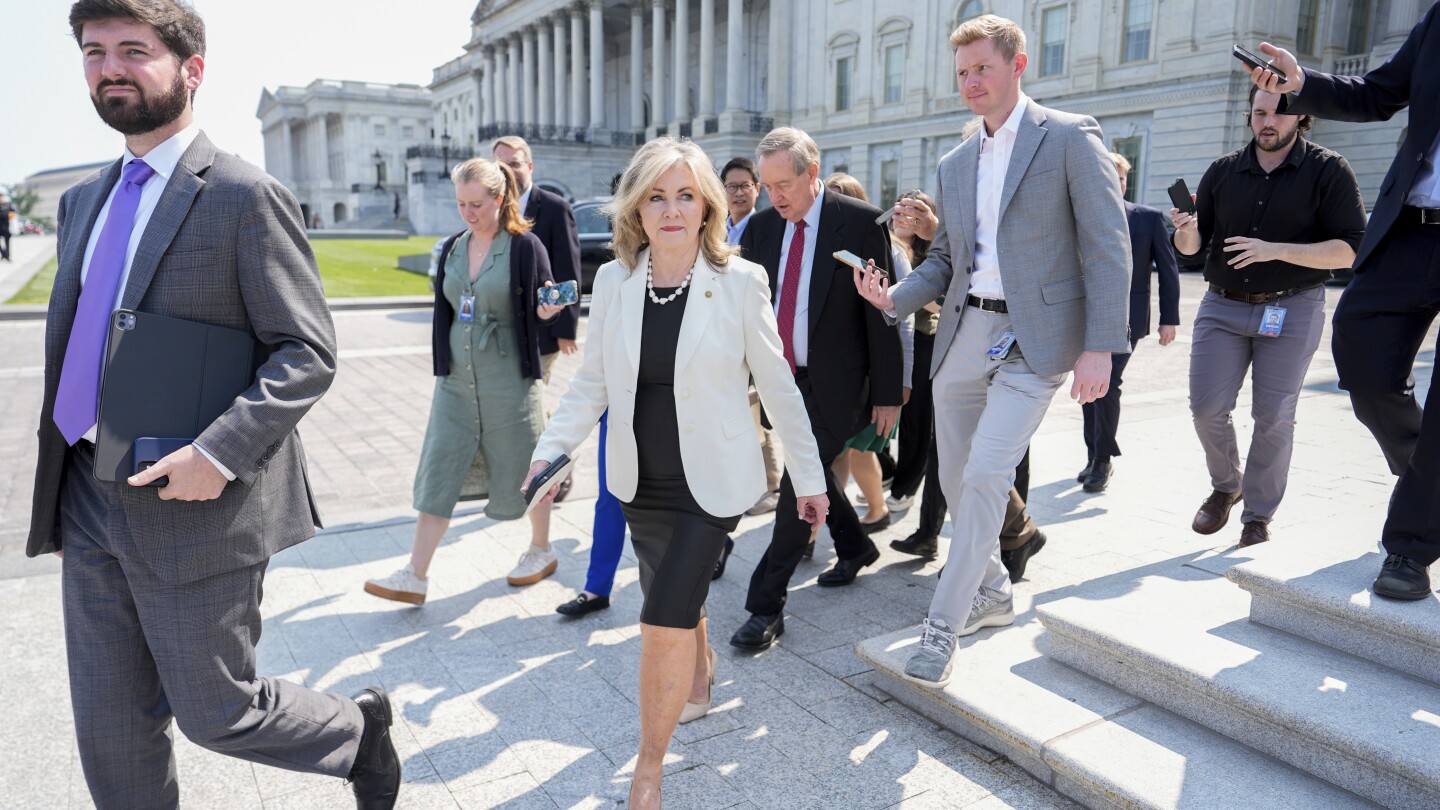
Sensing the moment was right on Monday night, Republican Sen. Marsha Blackburn of Tennessee, who opposed the AI provision and had attempted to water it down, teamed up with Democratic Sen. Maria Cantwell of Washington to suggest striking the entire proposal. By morning, the provision was removed in a 99-1 vote.
The whirlwind demise of a provision that initially had the backing of House and Senate leadership and the White House disappointed other conservatives who felt it gave China, a main AI competitor, an advantage.
Ryan Fournier, chairman of Students for Trump and chief marketing officer of the startup Uncensored AI, had supported the moratorium, writing on X that it “stops blue states like California and New York from handing our future to Communist China.”
“Republicans are that way … I get it,” he said in an interview, but added there needs to be “one set of rules, not 50” for AI innovation to be successful.
AI advocates fear a patchwork of state rules
Tech companies, tech trade groups, venture capitalists and multiple Trump administration figures had voiced their support for the provision that would have blocked states from passing their own AI regulations for years. They argued that in the absence of federal standards, letting the states take the lead would leave tech innovators mired in a confusing patchwork of rules.
Lutnick, the commerce secretary, posted that the provision “makes sure American companies can develop cutting-edge tech for our military, infrastructure, and critical industries — without interference from anti-innovation politicians.” AI czar Sacks had also publicly supported the measure.
After the Senate passed the bill without the AI provision, the White House responded to an inquiry for Sacks with the president’s position, saying Trump “is fully supportive of the Senate-passed version of the One, Big, Beautiful Bill.”
Acknowledging defeat of his provision on the Senate floor, Cruz noted how pleased China, liberal politicians and “radical left-wing groups” would be to hear the news.
But Blackburn pointed out that the federal government has failed to pass laws that address major concerns about AI, such as keeping children safe and securing copyright protections.
“But you know who has passed it?” she said. “The states.”
Conservatives want to win the AI race, but disagree on how
Conservatives distrusting Big Tech for what they see as social media companies stifling speech during the COVID-19 pandemic and surrounding elections said that tech companies shouldn’t get a free pass, especially on something that carries as much risk as AI.
Many who opposed the moratorium also brought up preserving states’ rights, though proponents countered that AI issues transcend state borders and Congress has the power to regulate interstate commerce.
Eric Lucero, a Republican state lawmaker in Minnesota, noted that many other industries already navigate different regulations established by both state and local jurisdictions.
“I think everyone in the conservative movement agrees we need to beat China,” said Daniel Cochrane from the Heritage Foundation. “I just think we have different prescriptions for doing so.”
Many argued that in the absence of federal legislation, states were best positioned to protect citizens from the potential harms of AI technology.
“We have no idea what AI will be capable of in the next 10 years and giving it free rein and tying states hands is potentially dangerous,” Rep. Marjorie Taylor Greene wrote on X.
A call for federal rules
Another Republican, Texas state Sen. Angela Paxton, wrote to Cruz and his counterpart, Sen. John Cornyn, urging them to remove the moratorium.
She and other conservatives said some sort of federal standard could help clarify the landscape around AI and resolve some of the party’s disagreements.
But with the moratorium dead and Republicans holding only narrow majorities in both chambers of Congress, it’s unclear whether they will be able to agree on a set of standards to guide the development of the burgeoning technology.
In an email to The Associated Press, Paxton said she wants to see limited federal AI legislation “that sets some clear guardrails” around national security and interstate commerce, while leaving states free to address issues that affect their residents.
“When it comes to technology as powerful and potentially dangerous as AI, we should be cautious about silencing state-level efforts to protect consumers and children,” she said.
___
Associated Press writer Matt Brown in Washington contributed to this report.
