



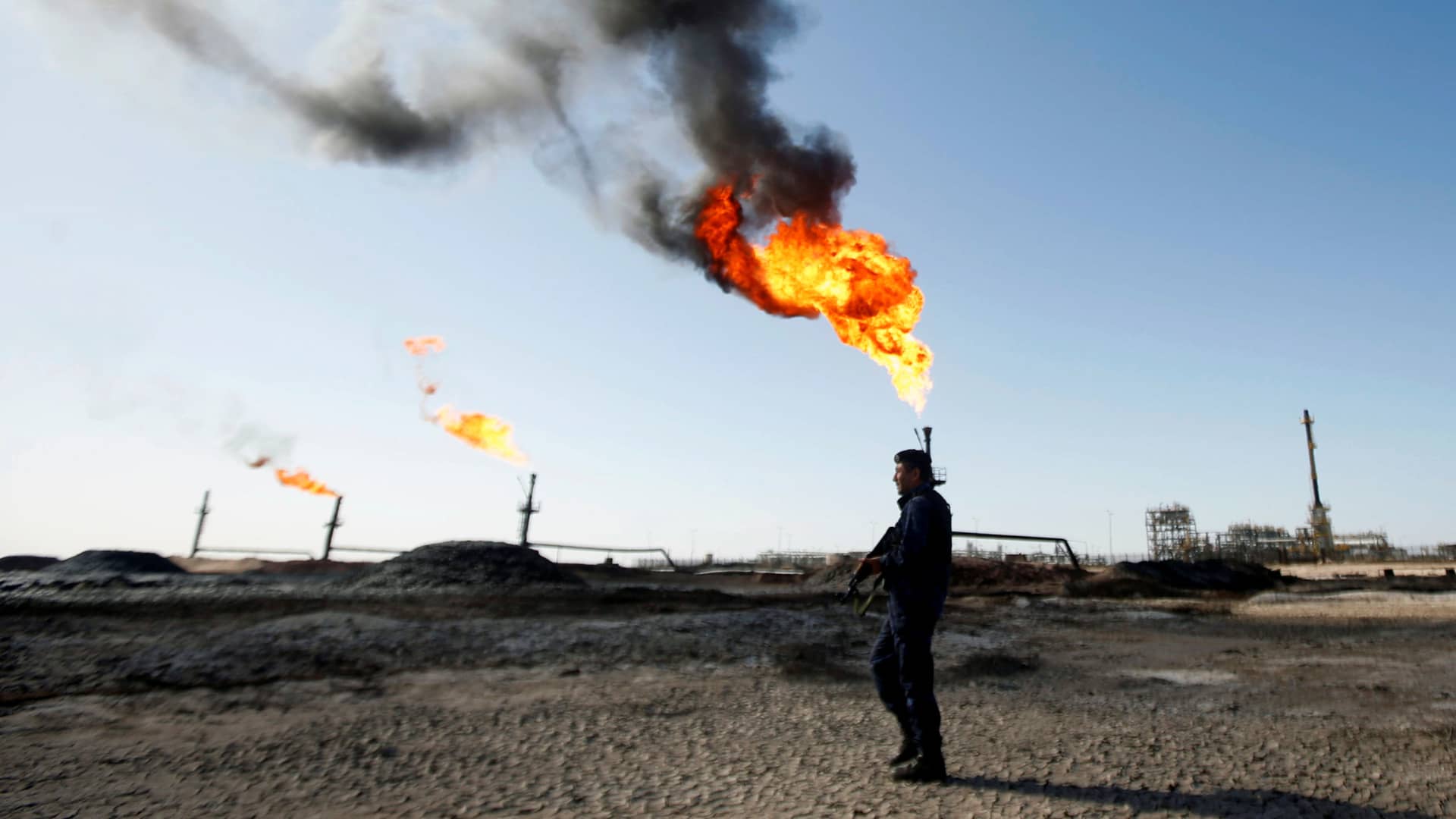
Iraq was plunged into a nationwide blackout earlier this week, as a temperature surge to 122 degrees Fahrenheit (50° Celcius) — and subsequent spiking demand for electricity — pushed the country’s faltering power grid to the breaking point. For a country that has seen as much conflict and instability as Iraq, this could come as unsurprising – except for the fact that the nation is OPEC’s second-largest oil producer and has the world’s fifth-largest proven oil reserves. Scores of international energy companies have facilities in the Middle Eastern country, and billions of dollars have been invested in its power sector. Blackouts have nevertheless become a common occurrence in the country’s scorching summers, and shorter power cuts take place almost daily, with many Iraqis depending on private generators for reliable power — while those without that access are left to suffer. So why is such an oil-rich country unable to keep the lights on? Iraq’s power crisis has been years in the making. The Iraqi government has struggled to provide its citizens with reliable energy since the 2003 U.S.-led invasion of Iraq, after which the fall of Saddam Hussein’s regime and the ensuing turmoil left the national grid unable to cope with demand due to chronic under-investment, mismanagement and corruption — like the embezzlement of public funds intended for electricity projects. This spilled into civil unrest in the summer of 2021, when hundreds of Iraqis took to the streets amid power and water outages gripped large parts of the country, And just in July, power cuts sparked fresh protests across the country against a backdrop of extreme heat. Iran reliance and gas flaring Iraq relies heavily on neighboring Iran for gas and power: in 2023, 47% of the gas Iraq consumed came from Iran and produced an estimated 29% of Iraqi power generation. But the Iranian gas supply is also unreliable — in part because Iran often has trouble keeping its own lights on, due to sanctions and mismanagement, and because Tehran at times withholds its exports to Iraq for political reasons. “Iraq has been suffering from inadequate electricity for decades. It’s a supply and demand problem as a growing and richer population demands electricity the state cannot supply,” James Jeffrey, a distinguished fellow at the Washington Institute who previously served as the U.S. ambassador to Iraq, told CNBC. The country of 46 million in fact has huge quantities of gas – but “Iraq never developed its natural gas sector. Quantities are huge but just flared off,” Jeffrey said. He was referencing gas flaring, during which gas is burned off and lost during oil production, leading to huge financial and resource losses as well as significant damage to the environment. “The reasons for this failure range from bureaucratic problems, incapacity to do strategic planning, and pressure from Iran through proxy political parties,” Jeffrey said. “Iran wants to keep selling billions in gas and electricity to Baghdad and also wants Iraq dependent on Tehran.” Sanctions pressure In March, the Trump administration – as part of its maximum-pressure sanctions strategy against Iran – rescinded the waiver that Washington has historically granted Iraq to continue buying Iranian electricity without breaching U.S. sanctions. The move means Iraq can no longer import Iranian electricity – which comprises about 3% or Iraq’s power supply, according to Platts reporting – but Baghdad can still import Iranian gas, which provides the much larger part of its power. The U.S. has long urged Iraq to diversify its energy sources to reduce its reliance on Iran. Sanctioning Baghdad’s purchases of Iranian gas would deal a hammer blow to the country’s ability to generate electricity, and likely trigger an economic crisis and political instability. But the specter of it – and continued U.S. pressure – is a good thing for Iraq, many analysts say, as it’s pushed Iraq to invest more in its power generation capacity and enact reforms in the sector. “Iraq will gain energy independence, bolstering the authority of its central government — which Iran has exploited with its cheap energy for too long,” Behnam Ben Taleblu, a senior fellow at the Foundation for Defense of Democracies in Washington D.C., wrote in a report published in March. “The hard part now is ensuring that Tehran cannot continue exploiting Baghdad’s political environment and that the government finds reliable energy alternatives.” Power projects underway A number of major projects are underway to improve Iraq’s energy independence. TotalEnergies’ $27 billion Gas Growth Integrated Project, signed in 2023, aims to capture some of Iraq’s flared gas for use in power plants and build a 1-1.25 gigawatt solar park for the southern city of Basra. Siemens Energy this year announced a framework to develop up to 14 gigawatts of gas-fired power capacity using domestic gas, including captured flare gas. For reference, the current capacity of Iraq’s national grid is less than 28 gigawatts, compared to a peak demand of 48 gigawatts, according to Jessica Obeid, head of Energy Transitions at SRMG Think. There is also more focus on renewable energy and cross-border interconnection, with a link to Jordan’s power grid underway and another to Kuwait still in the works. Still, the transition is difficult and will both take time and likely face continued obstacles due to corruption, pressure from Iran-backed members of Iraq’s government, and political unpredictability. Iraqi energy independence is “over time very realistic,” Jeffrey said. “The U.S. [sanctions] move was smart but we need to give Iraq some time, as major infrastructure needed doesn’t spring up overnight.”
