



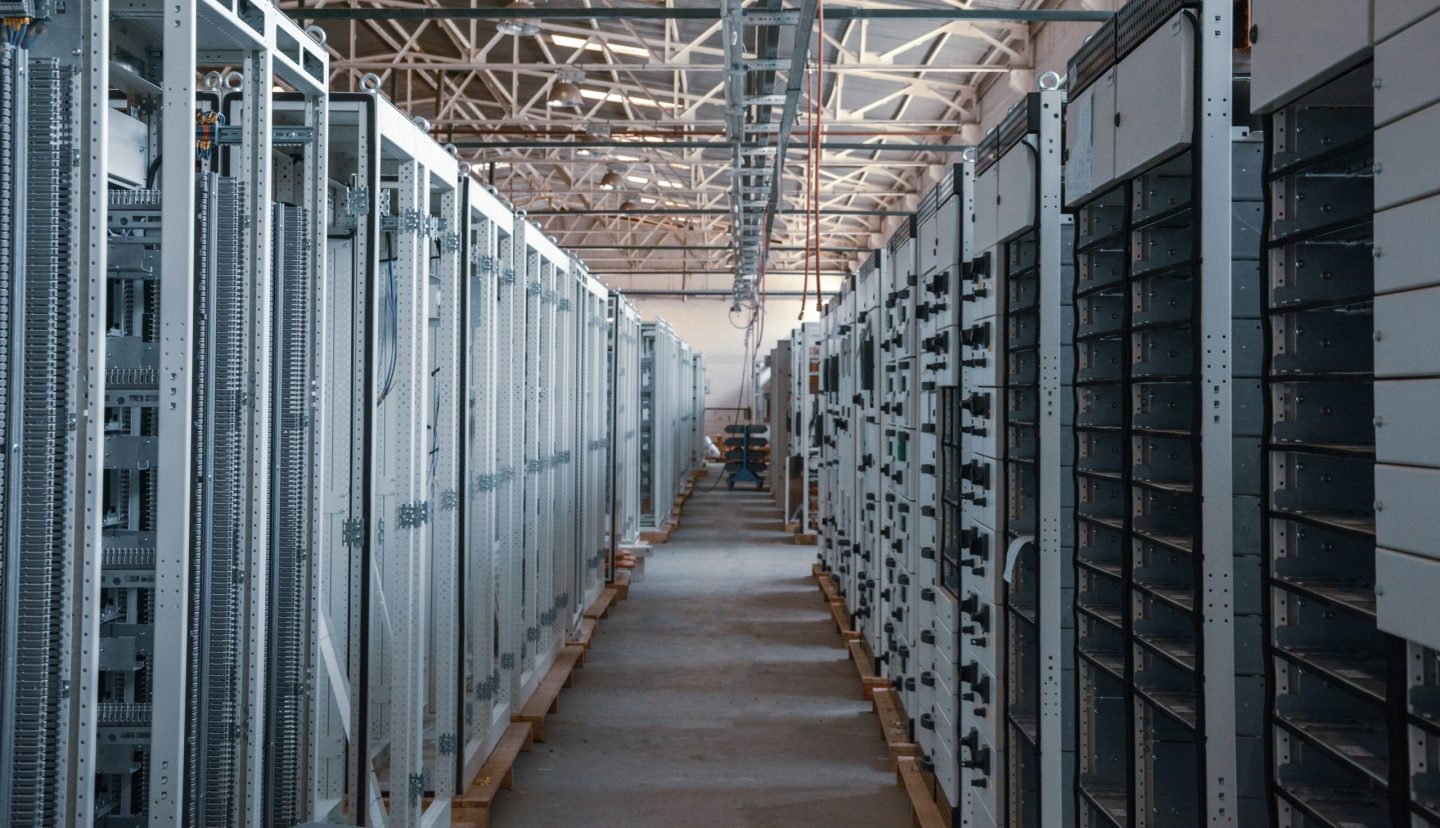
As more companies in Asia Pacific adopt artificial intelligence to boost their operations, the pressure on data centres is growing fast. Traditional facilities, built for earlier generations of computing, are struggling to keep up with the heavy energy use and cooling demands of modern AI systems. By 2030, GPU-driven workloads could push rack power densities toward 1 MW, making incremental upgrades no longer enough. Instead, operators are now turning toward purpose-built “AI factory” data centres that are designed from the ground up.
AI News spoke with Paul Churchill, Vice President of Vertiv Asia, to better understand how the region is preparing for this shift and what kinds of infrastructure changes lie ahead.
Explosive market growth is setting the pace
The AI data-centre market is projected to surge from $236 billion in 2025 to nearly $934 billion by 2030. This growth is driven by rapid adoption of AI in industries like finance, healthcare, and manufacturing. These sectors rely on high-performance computing environments powered by dense GPU clusters, which require far more energy and cooling capacity than traditional servers.
In Asia Pacific, this demand is amplified by government investments in digitalisation, the expansion of 5G, and the rollout of cloud-native and generative AI applications. All of this is pushing compute needs higher at a pace the region has never seen before.
Churchill explained that meeting this demand requires more than just larger facilities. It calls for smarter infrastructure strategies that are scalable and sustainable. “Infrastructure leaders must move beyond piecemeal upgrades. A future-ready strategy involves adopting AI-optimised infrastructure that combines high-capacity power systems, advanced thermal management, and integrated, scalable designs,” he said.
Cooling and power challenges are rising
As rack densities increase from 40 kW to 130 kW, and potentially up to 250 kW by 2030, cooling and power delivery are becoming important issues. Traditional air cooling methods are no longer enough for these conditions.
To address this, Vertiv is developing hybrid cooling systems that mix direct-to-chip liquid cooling with air-based solutions. Systems can adjust to changing workloads, reduce energy use, and maintain reliability. “Our coolant distribution units enable direct-to-chip liquid cooling while ensuring reliability and serviceability in high-density environments,” Churchill said.

Power delivery is also becoming more complex. AI workloads fluctuate rapidly, so infrastructure needs to react in real time. Vertiv is evolving its rack power distribution units and busway systems to handle higher voltages and improve load balancing. Intelligent monitoring helps operators manage loads more efficiently, reduce wasted capacity, and extend uptime – a key consideration in parts of Southeast Asia where power grids are less stable.
Data centres are being redesigned for AI
The rise of liquid-cooled GPU pods and 1 MW racks, like those planned by AMD and hyperscalers such as Microsoft, Google, and Meta, signals a deeper architectural shift. Instead of retrofitting older facilities, new data centres are being designed specifically to support AI.
“The future of data-centre architecture is hybrid, and these infrastructures require facilities to be built around liquid flow,” Churchill said. This includes new floor layouts, advanced coolant distribution, and more sophisticated power systems.
The next-generation facilities will integrate cooling, power, and monitoring from the chip level to the grid. For Asia Pacific, where hyperscale campuses are expanding rapidly, this kind of integrated design is essential to keep up with performance expectations and sustainability goals.
From incremental upgrades to AI factory data centres
By 2030, Asia Pacific is expected to overtake the US in data centre capacity, reaching almost 24 GW of commissioned power. To handle this growth, enterprises are moving away from ad hoc upgrades toward full-stack AI factory data centres.
Churchill said this transition should happen in stages. The first step is integrated planning, bringing together power, cooling, and IT management rather than treating them as separate systems. The approach simplifies deployment and provides a strong base for scaling.
The second step is to adopt modular and prefabricated systems. These allow companies to add capacity in phases without major disruptions. “Companies can deploy factory-tested modules alongside existing infrastructure, gradually migrating workloads to AI-ready capacity without disruptive overhauls,” he said.
Finally, sustainability must be built into every stage. This includes using lithium-ion energy storage, grid-interactive UPS systems, and higher-voltage distribution to improve efficiency and resilience.
DC power gains new relevance for AI data centres
Vertiv recently introduced PowerDirect Rack, a DC power shelf designed for AI and high-performance computing. Switching to DC power can cut energy losses by reducing the number of conversion steps between the grid and the server. It also aligns with renewable energy and battery storage systems, which are becoming more common in Asia Pacific.
This is especially useful in energy-constrained markets like Vietnam and the Philippines. In these regions, flexible power solutions are essential to keep facilities running smoothly. As Churchill noted, DC power is “not just an efficiency play – it is a strategy for enabling sustainable scalability.”
Sustainability is becoming a central priority
With AI driving up energy use, data-centre operators are facing stricter regulations and rising grid constraints. This is particularly true in Southeast Asia, where power reliability and tariffs vary widely.
Vertiv is working with operators to integrate alternative energy sources like lithium-ion batteries, hybrid power systems, and microgrids. These can reduce dependence on the grid and improve resilience. There is also growing interest in solar-backed UPS systems and advanced energy storage technologies, which help balance loads and manage costs.
Cooling efficiency is another major focus. Hybrid liquid cooling systems can reduce both energy and water use compared to older methods. “Our focus is on delivering infrastructure that meets performance demands while aligning with ESG goals,” Churchill said. “We’re collaborating with our partners to ensure that AI-driven growth in the region remains responsible, sustainable, and aligned with long-term digital and environmental objectives.”
Modular solutions support rapid expansion
Many emerging economies in Asia Pacific face challenges like limited land, unstable power supply, and shortages of skilled labour. In these settings, modular and prefabricated data-centre systems offer a practical solution.
Prefabricated modules can cut deployment times by up to 50%, while improving energy efficiency and scalability. They allow operators to expand gradually, adding capacity as needed without heavy upfront investment. The flexibility is especially valuable for AI workloads, which can grow quickly and unpredictably.
By combining compact design with energy-efficient operation, modular systems give operators a way to build AI-ready capacity faster and with less risk – a crucial advantage as the region’s digital economies grow.
Preparing for a demanding future
The AI surge is reshaping how data centres are built and operated in Asia Pacific. As workloads intensify and sustainability pressures mount, companies can no longer rely on outdated infrastructure. The move toward AI factory data centres, powered by advanced cooling, DC power, and modular systems, reflects a shift in how the region is preparing for the next era of computing.
(Photo by İsmail Enes Ayhan)

Want to learn more about AI and big data from industry leaders? Check out AI & Big Data Expo taking place in Amsterdam, California, and London. The comprehensive event is part of TechEx and co-located with other leading technology events. Click here for more information.
AI News is powered by TechForge Media. Explore other upcoming enterprise technology events and webinars here.
