



In a cement plant operated by Conch Group, an agentic AI system built on Huawei infrastructure now predicts the strength of clinker with over 90% accuracy and autonomously adjusts calcination parameters to cut coal consumption by 1%—decisions that previously required human expertise accumulated over decades
This exemplifies how Huawei is developing agentic AI systems that move beyond simple command-response interactions toward platforms capable of independent planning, decision-making, and execution.
Huawei’s approach to building these agentic AI systems centres on a comprehensive strategy spanning AI infrastructure, foundation models, specialised tools, and agent platforms.
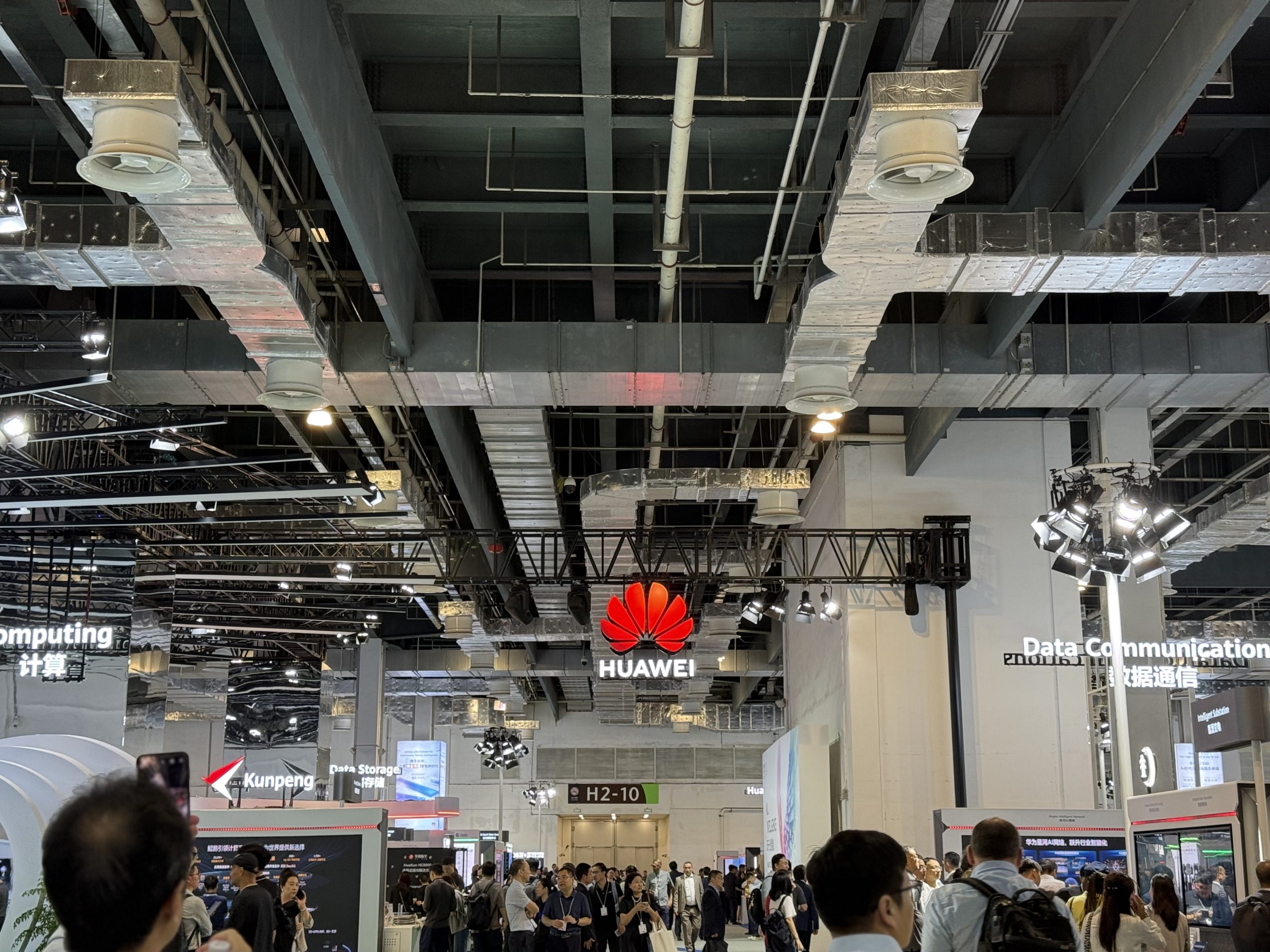
Zhang Yuxin, CTO of Huawei Cloud, outlined this framework at the recent Huawei Cloud AI Summit in Shanghai, where over 1,000 leaders from politics, business, and technology examined practical implementations across finance, shipping ports, chemical manufacturing, healthcare, and autonomous driving.
The distinction matters because traditional AI applications respond to user commands within fixed processes, while agentic AI systems operate with autonomy that fundamentally changes their role in enterprise operations.
Zhang characterised this as “a major shift in applications and compute,” noting that these systems make decisions independently and adapt dynamically, reshaping how computing systems interact and allocate resources. The question for enterprises becomes: how do you build infrastructure and platforms capable of supporting this level of autonomous operation?
Infrastructure challenges drive new computing architectures
The computational demands of agentic AI systems have exposed limitations in traditional cloud architectures, particularly as foundation model training and inference requirements surge.
Huawei Cloud’s response involves CloudMatrix384 supernodes connected through a high-speed MatrixLink network, creating what the company describes as a flexible hybrid compute system combining general-purpose and intelligent compute capabilities.
The architecture specifically addresses bottlenecks in Mixture of Experts (MoE) models through expert parallelism inference, which reduces NPU idle time during data transfers. According to the company’s technical specifications, this approach boosts single-PU inference speed 4-5 times compared to other popular models.
The system also incorporates memory-centric AI-Native Storage designed for typical AI tasks, aimed at enhancing both training and inference efficiency. ModelBest, a company specialising in general-purpose AI and device intelligence, demonstrated practical applications of this infrastructure.
Li Dahai, co-founder and CEO of ModelBest, detailed how their MiniCPM series—spanning foundation models, multi-modal capabilities, and full-modality integration—integrates with Huawei Cloud AI Compute Service to achieve 20% improvements in training energy efficiency and 10% performance gains over industry standards.
The MiniCPM models have found applications in automotive systems, smartphones, embodied AI, and AI-enabled personal computers.
From foundation models to industry-specific applications
The challenge of adapting foundation models for specific industry needs has driven the development of more sophisticated training methodologies. Huawei Cloud’s approach encompasses three key components: a complete data pipeline handling collection through management, a ready-to-use incremental training workflow, and a smart evaluation platform with preset evaluation sets.
The incremental training workflow reportedly boosts model performance by 20-30% through automatic adjustment of data and training settings based on core model features and industry-specific objectives. The evaluation platform enables quick setup of systems aligned with industry or company benchmarks, addressing both accuracy and speed requirements.
Real-world implementations illustrate the practical application of these methodologies. Shaanxi Cultural Industry Investment Group partnered with Huawei to integrate AI with cultural tourism operations.
Huang Yong, Chairman of Shaanxi Cultural Industry Investment Group, explained that using Huawei Cloud’s data-AI convergence platform, the organisation combined diverse cultural tourism data to create comprehensive datasets spanning history, film, and intangible heritage.
The partnership established what they term a “trusted national data space for cultural tourism” on Huawei Cloud, enabling applications including asset verification, copyright transaction, enterprise credit enhancement, and creative development.
The collaboration produced the Boguan cultural tourism model, which powers AI-driven tools, including a cultural tourism intelligent brain, smart management assistant, intelligent travel assistant, and an AI short video platform.
International implementations demonstrate similar patterns. Dubai Municipality worked with Huawei Cloud to integrate foundation models, virtual humans, digital twins, and geographical information systems into urban systems. Mariam Almheiri, CEO of the Building Regulation and Permits Agency at Dubai Municipality, shared how this integration has improved city planning, facility management, and emergency responses.
Enterprise-grade agent platforms emerge
The distinction between consumer-focused AI agents and enterprise-grade agentic AI systems centres on integration requirements and operational complexity. Enterprise systems must seamlessly integrate into broader workflows, handle complex situations, and meet higher operational standards than consumer applications designed for quick interactions.
Huawei Cloud’s Versatile platform addresses this gap by providing infrastructure for businesses to create agents tailored to production needs. The platform combines AI compute, models, data platforms, tools, and ecosystem capabilities to streamline agent development through deployment, release, usage, and management phases.
Conch Group’s implementation in cement manufacturing offers specific performance metrics. The company partnered with Huawei to create what they describe as the cement industry’s first AI-powered cement and building materials model.
The resulting cement agents predict clinker strength at 3 and 28 days with predictions deviating less than 1 MPa from actual results, representing over 90% accuracy. For cement calcination optimisation, the model suggests key process parameters and operational solutions that cut standard coal usage by 1% compared to class A energy efficiency standards.
Xu Yue, Assistant to Conch Cement’s General Manager, noted that the model’s success with quality control, production optimisation, equipment management, and safety establishes groundwork for end-to-end collaboration and decision-making through cement agents, moving the industry “from relying on traditional expertise to being fully driven by data across all processes.”
In corporate travel management, Smartcom developed a travel agent using Huawei Cloud Versatile that provides end-to-end smart services across departure, transfers, and flights. Kong Xianghong, CTO of Shenzhen Smartcom and Director of Smartcom Solutions, reported that the system combines travel industry data, company policies, and individual trip histories to generate recommendations.
Employees adopt over half of these suggestions and complete bookings in under two minutes. The agent resolves 80% of issues in an average of three interactions through predictive question matching.
What’s next for autonomous AI?
The implementations discussed at the summit reflect a broader industry trend toward agentic AI systems that operate with increasing autonomy within defined parameters. The technology’s progression from reactive tools to systems capable of planning and executing complex tasks independently represents a fundamental architectural shift in enterprise computing.
However, the transition requires substantial infrastructure investments, sophisticated data engineering, and careful integration with existing business processes. The performance metrics from early implementations—whether in manufacturing efficiency gains, urban management improvements, or travel booking optimisation—provide benchmarks for organisations evaluating similar deployments.
As agentic AI systems continue to mature, the focus appears to be shifting from technological capability demonstrationsto operational integration challenges, governance frameworks, and measurable business outcomes. The examples from cement manufacturing, cultural tourism, and corporate travel management suggest that practical value emerges when these systems address specific operational pain points rather than serving as general-purpose automation tools.
(Photo by AI News )
See also: Huawei details open-source AI development roadmap at Huawei Connect 2025

Want to learn more about AI and big data from industry leaders? Check out AI & Big Data Expo taking place in Amsterdam, California, and London. The comprehensive event is part of TechEx and is co-located with other leading technology events, click here for more information.
AI News is powered by TechForge Media. Explore other upcoming enterprise technology events and webinars here.
