



Microsoft is forming a new team to research superintelligence and other advanced forms of artificial intelligence.
Mustafa Suleyman, who leads Microsoft’s AI division overseeing Bing and Copilot, announced the creation of the MAI Superintelligence Team in a blog post. He said he will head the group and that Microsoft plans to put “a lot of money” behind the effort.
“We are doing this to solve real, concrete problems and do it in such a way that it remains grounded and controllable,” Suleyman wrote. “We are not building an ill-defined and ethereal superintelligence; we are building a practical technology explicitly designed only to serve humanity.”
Building a ‘humanist’ approach to superintelligence
The move comes as big tech companies race to attract top AI researchers. Meta, Facebook’s parent company, recently created its own Meta Superintelligence Labs and spent billions recruiting experts, even offering signing bonuses as high as $100 million. Suleyman didn’t comment on whether Microsoft plans to match such offers but said the new team will include both internal talent and new hires, with Karen Simonyan as chief scientist.
Before joining Microsoft, Suleyman co-founded DeepMind, which Google bought in 2014. He later led the AI startup Inflection, which Microsoft acquired last year along with several of its employees.
The hiring push reflects a broader trend. Since OpenAI released ChatGPT in 2022, companies have raced to bring generative AI into their products. Microsoft uses OpenAI’s models in Bing and Copilot, while OpenAI relies on Microsoft’s Azure cloud to power its tools. Microsoft also holds a $135 billion stake in OpenAI after a recent restructuring.
Reducing reliance on OpenAI
Despite the partnership, Microsoft has been working to diversify its AI sources as it lays the groundwork for future superintelligence research. Following the Inflection acquisition, the company began experimenting with models from Google and Anthropic, another AI startup founded by former OpenAI executives.
The new Microsoft AI research group will aim to build useful AI companions that assist people in education and other areas. Suleyman said the team also plans to focus on projects in medicine and renewable energy.
A different path from rivals
Unlike some peers, Suleyman said Microsoft isn’t trying to build an “infinitely capable generalist” AI. He doubts such systems could be kept under control and instead wants to develop what he calls “humanist superintelligence” – AI that serves human needs and delivers real-world benefits.
“Humanism requires us to always ask the question: does this technology serve human interests?” he said.
While the risks of AI are widely debated – from bias to existential threats – Suleyman said his team’s goal is to create specialist systems that achieve “superhuman performance” without posing major risks. He cited examples like AI that could improve battery storage or design new molecules, similar to DeepMind’s AlphaFold project that predicts protein structures.
Medical superintelligence on the horizon
Suleyman said Microsoft is especially focused on healthcare, predicting that AI capable of expert-level diagnosis could emerge in the next two or three years.
He described it as technology that can reason through complex medical problems and detect preventable diseases much earlier. “We’ll have expert-level performance at the full range of diagnostics, alongside highly capable planning and prediction in operational clinical settings,” he wrote.
As investors question whether massive AI spending will translate into profits, Suleyman emphasised that Microsoft is setting clear limits. “We are not building a superintelligence at any cost, with no limits,” he said.
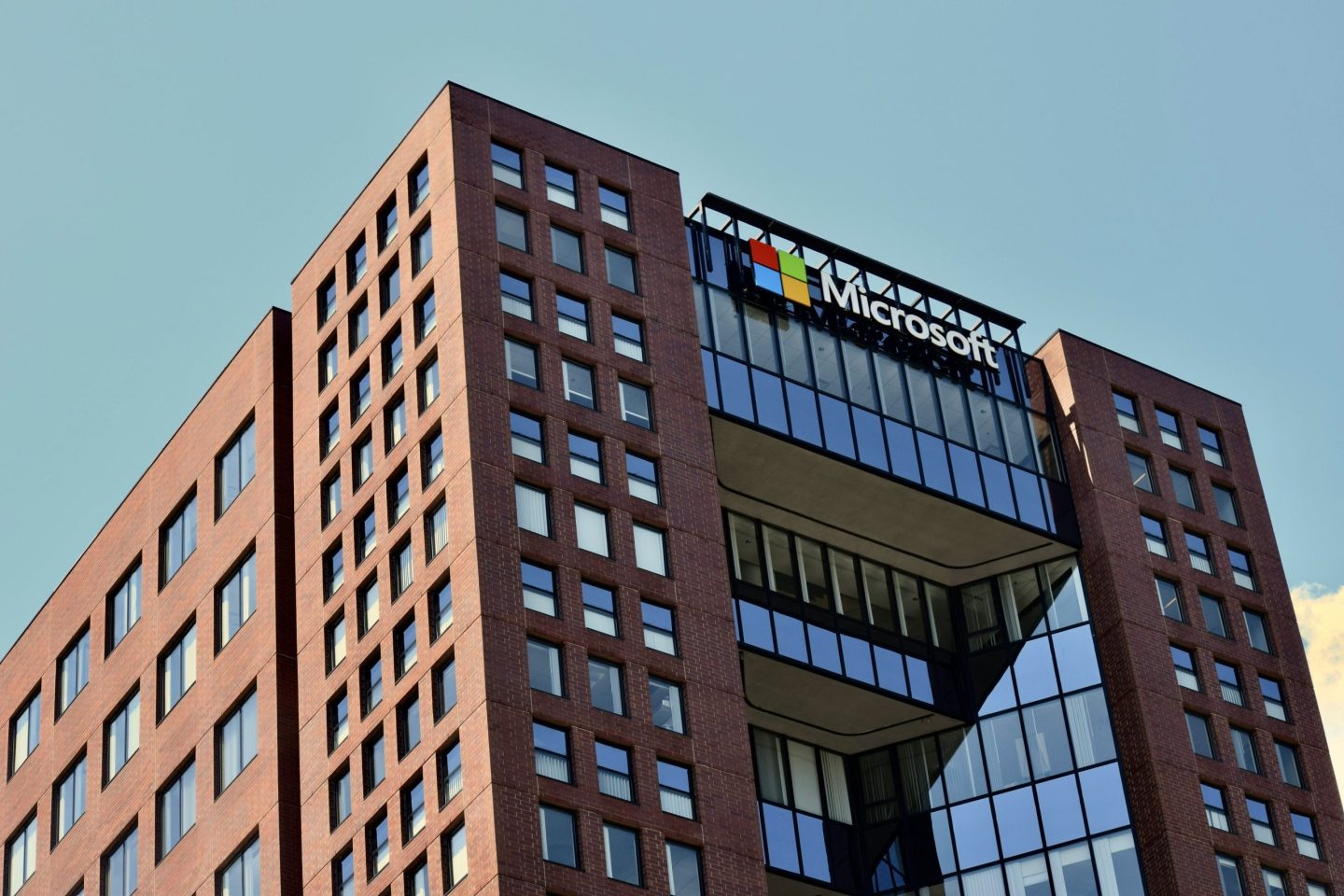
(Photo by Praswin Prakashan)
See also: Microsoft gives free Copilot AI services to US government workers

Want to learn more about AI and big data from industry leaders? Check out AI & Big Data Expo taking place in Amsterdam, California, and London. The comprehensive event is part of TechEx and co-located with other leading technology events. Click here for more information.
AI News is powered by TechForge Media. Explore other upcoming enterprise technology events and webinars here.
