



NEW YORK (AP) — Major retail chains and tech companies are offering new or updated artificial intelligence tools in time for the holiday shopping season, hoping to give consumers an easier gift-buying experience and themselves an augmented share of online spending.
Although AI-powered purchases are in early stages, the shopping assistants and agents rolled out by the likes of Walmart, Amazon and Google can do more than the chatbots of holidays past. The latest versions were designed to provide personalized product recommendations, track prices and to place some orders through unscripted “conversations” with customers.
Those features are on top of shopping updates from AI platforms like OpenAI’s ChatGPT and Google Gemini. In one of the season’s most talked-about launches, Google this month introduced an AI agent that can be instructed to call local stores to ask if a desired product is in stock.
San Francisco software company Salesforce estimated that AI would influence $73 billion, or 22%, of all global sales in one way or another from the Tuesday before Thanksgiving through Monday after the holiday, according to Caila Schwartz, Salesforce’s director of consumer insights.
The figure, which stood at $60 billion a year ago, encompasses everything from a ChatGPT query to AI-supplied gift suggestions on a retailer’s website, Schwartz said.
Despite the advancements, AI’s impact on holiday shopping will be “relatively limited” this year since not every shopping site has useful tools and not every shopper is willing to try them, said Brad Jashinsky, a senior retail industry analyst at information technology research and consulting firm Gartner.
“The more retailers that launch these tools, the better they get, and the more that consumers get comfortable and start to seek them out,” Jashinsky said. “But customer behavior takes a long time to change.”
Here are three ways the technology is poised to influence holiday shopping habits in 2025:
Bypassing the search bar
AI’s potential to simplify the search for the perfect present is most apparent so far in tools that promise to give shoppers faster and more detailed results than a web browser with a lot fewer clicks.
OpenAI upgraded ChatGPT with a shopping research feature that provides personalized buyers’ guides. The information comes from product pages, reviews. prices and a user’s previous interactions with the chatbot. The tool works best for complicated products like electronics and appliances, or for “detail-heavy” items like beauty or sporting goods, OpenAI said.
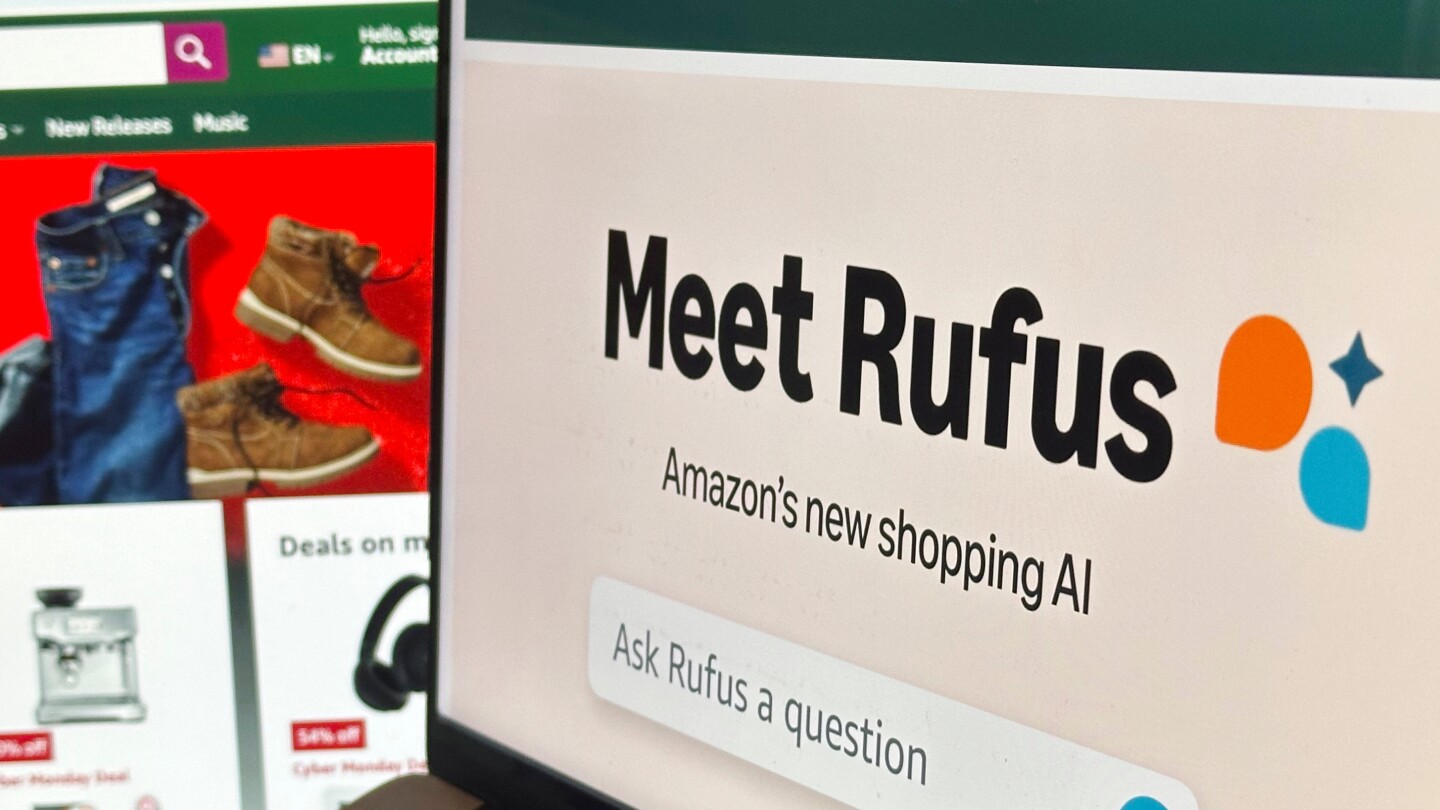
Then there’s Rufus, the shopping assistant that Amazon rolled out last year. It now remembers information customers previously fed it, like having four children that all like board games, for example. A user’s browsing and purchase history and reviews are used to personalize recommendations.
Google upgraded its AI Mode search tool to provide answers to detailed questions composed in natural language. For example, users can tell the agent they want to buy a casual sweater to wear with skirt or jeans in New York in January that goes with a skirt or jeans,
Responses are pulled from Google’s 50 billion product listings. The tool can also produce charts with side-by-side comparisons of prices, features, reviews and other factors. Previously, shoppers had to use keywords, filters and product links to find the information they needed.
“This is an expansionary moment, I think, for all of technology and for commerce,” Lilian Rincon, vice president of product, consumer shopping at Google, recently told The Associated Press.
Meanwhile, Walmart’s AI shopping assistant, Sparky, offers occasion-based recommendations and synthesizes reviews. An AI-powered gift finder on Target’s app exclusively for the holidays responds to prompts such as the age and special hobbies of the recipient.
New pricing tools and alerts
Tools for tracking online prices have been around for years, including CamelCamelCamel, a third-party service for Amazon prices, as well as Paypal’s Honey browser extension for monitoring thousands of online shops.
This holiday season, shoppers have new options.
Amazon launched a 90-day pricing history tracker this month for virtually everything it sells. Shoppers also now can set up alerts to receive notifications when prices on specific items fall within their budgets.
Google, which for years had a basic price tracker, launched a more advanced version that lets users refine their requests with details like a garment’s size and color. Microsoft’s Copilot also launched a price tracker this year.
Jason Goldberg, chief commerce strategy officer at Publicis Groupe, said he thinks the new pricing tools will add more pressure on retailers to make sure their prices are competitive.
“A lot of consumers that weren’t even looking for price alerts are going to discover price alerts for the first time,” Goldberg predicted.
New ways to buy
Amazon, OpenAI and Google are racing to create tools that would allow for seamless AI-powered shopping by taking consumers from browsing to buying within the same program instead of having to go to a retailer’s website to complete a purchase.
OpenAI launched a new instant checkout feature that lets users buy products suggested by ChatGPT without leaving the app. Users can order merchandise from Etsy sellers and from some brands that use Shopify, including Glossier, Skims and Spanx.
OpenAI and Walmart announced a similar deal in October, saying the partnership would allow ChatGPT members to use the instant checkout feature to shop for nearly everything available on Walmart’s website except for fresh food. For now, however, the feature only supports buying one item at a time.
A different deal Target struck with OpenAI lets shoppers put multiple items in a cart on ChatGPT, including fresh food products. But when customers are ready to pay for their orders, they are directed away from the chatbot to the Target app.
New tools from Amazon and Google will give shoppers a taste of having autonomous AI assistants do the buying for them. While the services still are limited, “agentic AI” is intended to be more independent and advanced than the generative AI chatbots that excel at research and writing, experts say.
Amazon is now letting Rufus automatically purchase items for customers who click an “auto buy” button while setting up price alerts. Once a product’s price drops to the desired level, customers receive notice of their completed orders and have a limited window to cancel, the company said.
The e-commerce giant also started allowing shoppers to use Rufus searches for brand-name products on the Amazon app as a gateway to other retailers. If Amazon doesn’t carry a desired item in its store, a “Shop Direct” button will take them to the website of a place that does.
Google’s AI Mode price tracker also includes a “buy for me” option that automatically makes a customer’s purchase through Google Pay when the price is right. The feature is available for products sold by Wayfair, Chewy, Quince and some Shopify merchants, and Google expects to keep adding more stores, the company said. sellers.
Google also expanded its web browser with an automated AI call feature that phones local businesses on behalf of customers looking for information or specific products. Google’s program discloses to the store that it’s an AI caller, and stores can choose not to participate, the company said.
Google said it’s applying the feature initially to specific product categories: toys, health and beauty, and electronics. Target and Walmart declined to comment on whether this type of service would be part of their future plans.
