



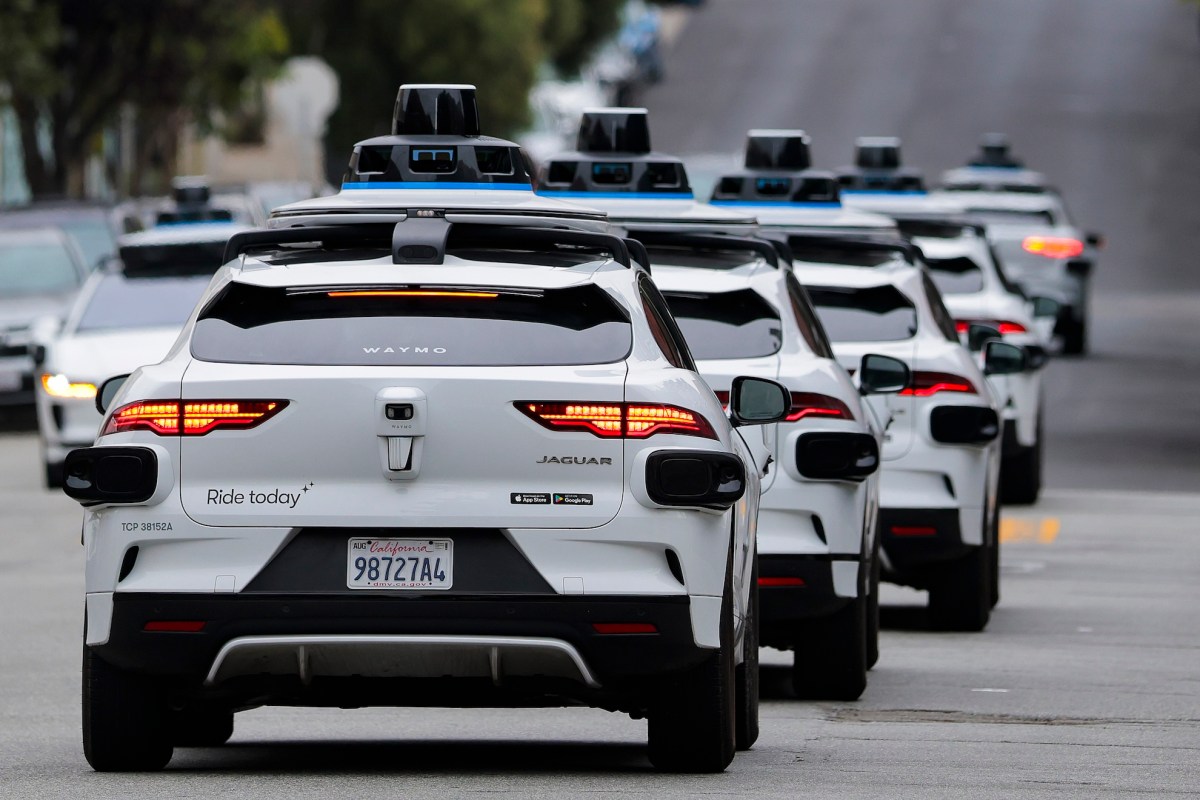
Waymo argued last week that fully autonomous vehicles are not possible without using a mix of sensors, and that “pure end-to-end” AI systems are not safe enough — shots at Tesla, despite the Alphabet-owned company not naming names.
The company took these swings in a blog post and an interview with Axios just one week ahead of a September 3 event where Tesla is expected to formally introduce its two-seater Cybercab into its own small-but-growing robotaxi fleet. Waymo also announced three new markets on Tuesday morning, further extending its robotaxi network, which is serving customers in more than a dozen U.S. cities.
Despite being technical and a bit wonky, Waymo’s claims kicked off a social media fight that lasted all weekend.
“Arguments they bring forward are poor,” Pierre Ferragu, an analyst and managing partner at New Street Research who covers Tesla, wrote on X. “My read: Waymo built a driving gas plant that AI at scale makes irrelevant, and now falls into incumbent rhetoric. Innovator dilemma 101.”
“How it feels to say your data and record of success leads you to believe driverless mileage, AI interpretability, and multiple sensor types are critical for safe, fully autonomous driving at scale,” wrote Ethan Teicher, a Waymo spokesperson, while sharing a John Wick promo image that depicts more than a dozen guns pointed at the head of Keanu Reeves’ character.
The metaphorical knives — or guns, apparently — are out because if Tesla can prove the Cybercab is capable of performing at scale, it would set up a major fight between the two companies and their disparate approaches to developing autonomous vehicles. At stake is a market that could be worth hundreds of billions of dollars.
For years, this fight was more academic or philosophical than anything. But last week Waymo flexed its real-world experience.
“Cameras are incredible, but they aren’t enough,” Srikanth Thirumalai, a VP who oversees Waymo’s driving software, wrote in the company’s blog post. “For years, there’s been a debate over whether cameras alone could solve full autonomy. Now, after more than 200 million real-world miles, the data is clear: safe, fully autonomous operations at scale require more. By combining inputs from cameras, lidar, and radar, the Waymo Driver creates a rich, redundant world view that no single sensor can replicate.”
Thirumalai also wrote that a pure end-to-end neural architecture that “takes in raw pixels and directly outputs steering commands” — which is Tesla’s approach to autonomy — will “run the risk of black box failures.”
“Even the best AI models with trillions of parameters still hallucinate,” he told Axios. “There is no click reboot or reload or refresh [in] physical AI. You have to deal with the consequences of it.”
Waymo has long taken the approach of integrating a mix of cameras, radar, and lidar sensors into vehicles built by other manufacturers. While it’s a more conservative technological approach, it has allowed the company to scale to a fleet of around 4,000 robotaxis across 14 U.S. cities, which provides 500,000 paid trips per week.
At Tesla, Elon Musk has long derided the use of lidar, calling it a “crutch.” The company has instead put all its efforts into trying to make fully autonomous cars using just cameras and AI. And Tesla has spent the last few years developing the Cybercab, a purpose-built two-seater gold sedan designed to be autonomous from the get-go.
The Cybercab has no steering wheel or pedals and a relatively small battery, and Tesla plans to pump out thousands of them — a recent filing shows the company aiming to build more than 125,000 annually.
Of course, Tesla still needs to show that its self-driving software is capable of full autonomy. The company is years behind schedule; Musk once promised there would be 1 million robotaxis on the road in 2020 — though the company has spent the last year trialing its own Tesla Robotaxi network in a handful of cities in Texas and Florida using modified Model Y SUVs.
Those trials have stayed small, with Tesla claiming it’s prioritizing safety over scale. It’s only within the last few weeks that Tesla has pulled safety monitors out of a majority of those cars.
But that is likely about to change. Tesla has started registering Cybercabs with the Texas DMV ahead of the September 3 event. It’s unclear how quickly the company plans to scale the fleet after introducing the shiny two-seater, though social media users have spotted dozens of them sitting in parking lots around the country.
If Tesla can show that its AI-first approach to self driving can work at scale, it would be a major accomplishment for the company and validation for its software engineers.
The company will still have to demonstrate that it can solve all the other problems that come with operating a robotaxi network, though — problems that Waymo continues to discover as it operates thousands of self-driving cars. Those include navigating harsh weather, steering clear of emergency situations, and operating safely around school zones.
But beyond the technological differences, there’s another fight brewing: cost. Waymo’s technological approach is naturally more expensive. It uses more sensors, and installs them on vehicles that other companies manufacture. That means Waymo has to buy those vehicles and, in the case of the Zeekr-made Ojai, pay import taxes on them before they’re even outfitted with self-driving technology.
Tesla makes its own cars and is betting its AI will be capable enough to never need anything other than a few cameras to navigate the world. It’s a major gamble — one Waymo clearly thinks won’t pay off. But if it does, it gives Tesla the chance to outcompete Waymo, or possibly even Uber, on price.
When you purchase through links in our articles, we may earn a small commission. This doesn’t affect our editorial independence.
