



WASHINGTON (AP) — The Trump administration’s use of a popular messaging app to discuss sensitive military plans — with a journalist on the text chain — is raising questions about security and the importance of safeguarding the nation’s secrets.
It’s also highlighting the differences between classified and public information, and demonstrating that even encrypted apps like Signal can lead to embarrassing leaks if the humans doing the texting don’t follow basic security tips.
What’s the difference between ‘classified’ and ‘top secret’?
President Donald Trump’s administration says no classified material was leaked when senior officials used Signal to discuss upcoming attack plans against the Houthi rebels in Yemen — even though a journalist was on the chat.
But even if the information had been declassified by the Pentagon, it contained details that would have been highly valuable to the Houthis or other adversaries, showing how sometimes the decision of what to classify is a judgment call.
The federal government routinely classifies vast amounts of information pertaining to military and intelligence operations. The material ranges from top secret nuclear programs or the identities of undercover agents all the way to mundane records that would be of little interest to anyone, let alone America’s adversaries. In 2011, for example, the CIA finally declassified its recipe for invisible ink — from 1917.
Advocates for open government have long complained that the push for secrecy goes too far, by protecting information that could shine a light on government activities or matters of public interest, including about UFO sightings and a 60-year-old presidential assassination.
While the public typically calls any information withheld by the government “classified,” that term only refers to the three broad categories used to “classify” information based on the need for secrecy: confidential, secret and top secret.
While files marked “confidential” contain information that’s not meant to be released, the need for security or access restrictions isn’t as great as for material considered “top secret,” which includes the nation’s nuclear secrets and other material that, if released, could pose a grave danger to national security.
While the Pentagon hasn’t offered classification details about the information in the Signal chats, information about upcoming military strikes is typically tightly guarded to ensure adversaries don’t have advance warning that could jeopardize the mission or put American service members at risk.
The Pentagon closely guards even some publicly available information. Material categorized as “controlled unclassified information,” while not secret, is still considered sensitive enough that military service members are prohibited from discussing it on unsecured devices like personal phones.
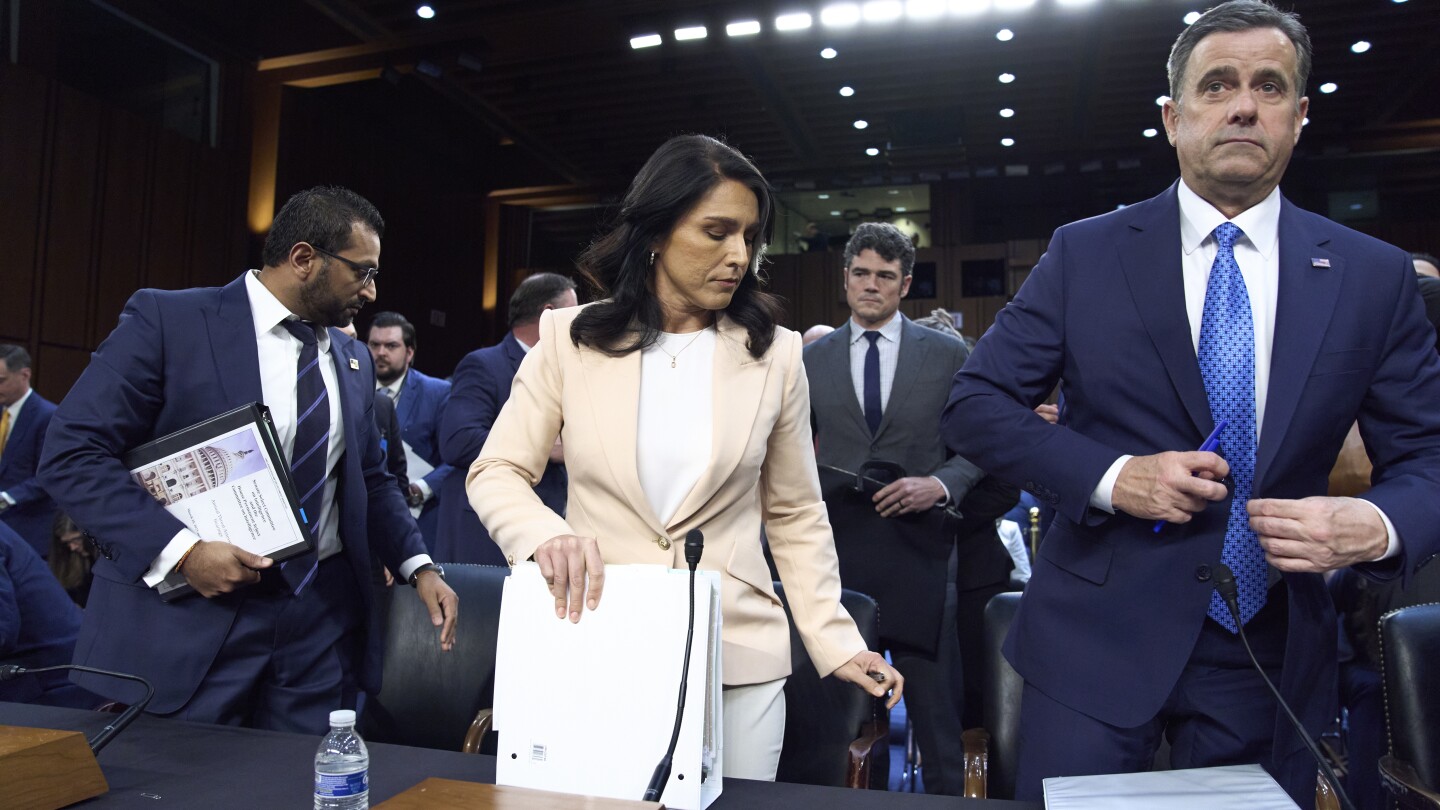
Director of National Intelligence Tulsi Gabbard and CIA Director John Ratcliffe were asked about that policy during a Senate hearing this week as they were grilled over the Signal chat. Democratic Sen. Mark Kelly of Arizona noted that Department of Defense policy “prohibits discussion of even what is called controlled unclassified information on unsecured devices,” and asked if Ratcliffe and Gabbard, who oversees the nation’s 18 intelligence agencies, were aware of that rule.
“I haven’t read that policy,” Gabbard said.
“I’m not familiar with the DOD policy,” Ratcliffe said.
Who decides to classify or declassify something?
The power to classify or declassify lies in the hands of top federal officials, including the president and Cabinet secretaries. For military information like the attack plans discussed over Signal, the power lies with Defense Secretary Pete Hegseth, who has faced demands that he resign over the leak.
The president’s ability to declassify information has been invoked when presidents have been accused of mishandling secrets. In 2022, Trump ally Kash Patel, now the FBI director, testified that he witnessed Trump declassify material before FBI officials found it at Trump’s Mar-a-Lago resort.
The Pentagon hasn’t said whether Hegseth declassified the attack plans before or after the Signal conversation, but Ratcliffe, Gabbard and the White House have all said the chats contained no classified information.
“I haven’t participated in any Signal group messaging that relates to any classified information at all,” Ratcliffe proclaimed at one point.
That explanation has failed to satisfy Democrats who say that plans for imminent military strikes are regularly classified. National security experts agree. They say it would be highly unusual for the Pentagon to publicize such information and that any lower-level officer caught leaking such material on Signal would face serious repercussions.
There’s secure, and then there’s secure enough for
classified secrets
For many consumers, encrypted apps like Signal can offer greater protections for everyday conversations. But that doesn’t mean they’re secure enough for government secrets, or immune to human error, as the inclusion of a reporter on the text chain shows.
Senior federal officials who handle classified data receive extensive training about the need to use approved devices and platforms to discuss government secrets. Intelligence and national security agencies have whole departments devoted to cybersecurity and the protection of state secrets.
Government cybersecurity officials have recommended that federal employees use encrypted apps like Signal, which can offer greater security for routine communication, and Ratcliffe said this week it was a “ permissible ” app for senior officials to use. But the app is only as secure as the device it’s downloaded onto.
The government’s most sensitive information is typically discussed in a facility known as a sensitive compartmented information facility, or SCIF, which is designed to allow officials to review or discuss secrets without fear of eavesdropping or cyber intrusion.
Any senior official using a personal device to discuss classified material could be at risk of cyberespionage, said Michael Williams, an expert on international relations and national security at Syracuse University.
“Signal may be encrypted, but it’s the devices that are really the issue,” Williams said. “All of these people are being targeted.”
