



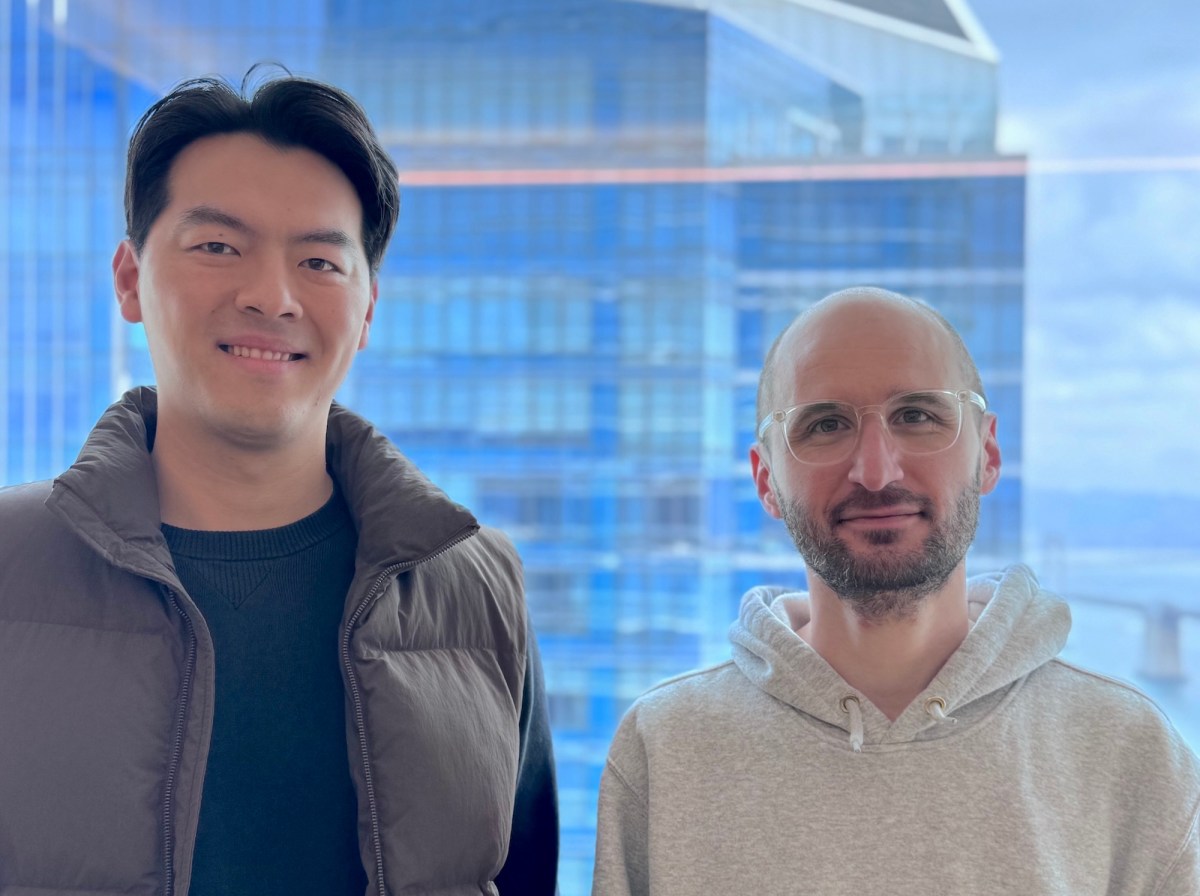
Dennis Xu is a repeat tech startup founder, but he’s the first to admit he’s not a programmer.
After co-founding AI note-taking app Mem — one of OpenAI’s earliest venture investments — he has now launched a new startup called Adaptive Computer.
Its grandiose mission is nothing less than a complete reimagining of personal computer software. He wants non-programmers to be using full-featured apps that they’ve created themselves, simply by entering a text prompt into Adaptive’s no-code web-app platform.
To make that happen, Xu and co-founder Mike Soylu just announced a $7 million seed round, led by Pebblebed with participation from Conviction, Weekend Fund, Jake Paul’s Anti Fund, Roblox CEO Dave Baszucki, and others. (Pebblebed is a relatively new seed fund founded by Pamela Vagata, an AI engineer formerly of Stripe, and Keith Adams, former chief architect at Slack.)
Prior to LLMs, Xu said he had to work with designers, who worked with the engineers “basically influencing people” to build the things he envisioned. (He left Mem in 2023.)
But now, “we’d be able to put something in every person’s pocket where they could actually build the personal computer of their dreams,” as he describes it.
To be certain, this isn’t about the computer itself or any hardware — despite the company’s name. The startup currently only builds web apps.
However, for every app it builds, Adaptive Computer’s engine handles creating a database instance, user authentication, file management, and can create apps that include payments (via Stripe), scheduled tasks, and AI features such as image generation, speech synthesis, content analysis, and web search/research.
In demoing its product, called ac1, which is still in “alpha mode” (meaning it has limited features and functionality), I gave it a text prompt asking for a bicycle ride log app. A minute later, it built a JavaScript-based app, complete with back-end database, with no further configuration needed on my part.
While this app didn’t integrate with third-party services like my fitness watch, it did automatically add features like sorting rides, tallying total distance, and comparing rides. This was also a fully functional website, not a prototype, that could be shared with others to log their own rides, without sharing my personal data.
For true non-programmers
As interesting as this idea is, Adaptive Computer is hardly the first and only “vibe coding” platform out there, meaning writing code based on text prompts.
Competitor Replit claims to have over 30 million users and has begun to cater to non-programmers so heavily that its founder CEO, Amjad Masad, caused outrage by declaring on X last month. “I no longer think you should learn to code.”
Fast on both companies’ heels is Lovable, which claims its vibe coding project is not just good for non-programmers, but better for designing than Figma. The early-stage Swedish startup claims it grew its customer base to $10 million in ARR in its first 60 days.
Xu says the difference between these more established products and his startup is that the others were originally geared toward making programming easier for programmers.
And that means non-programmers could struggle to use them. “Try building an AI tool with either, and they’ll ask you for API keys,” Xu says, noting that it’s these kinds of details that create difficulty for non-programmers. “We’re building for the everyday person who is interested in creating things to make their own lives better. Their users are people who are building apps for other people.”
Besides taking care of the back-end database and other technical details, Adaptive apps can work together. For instance, a user can build a file-hosting app and the next app can access those files.
Xu likens this as more like an “operating system” rather than a single Web app.
Other examples of apps created by early users include AI generated storytelling; a coffee bean e-commerce site; and a text-to-speech reader for PDF files.
Adaptive Computer has three subscription levels: a limited free version; a $20/month tier; and a $100/month Creator/Pro.
Here’s a peek.
