



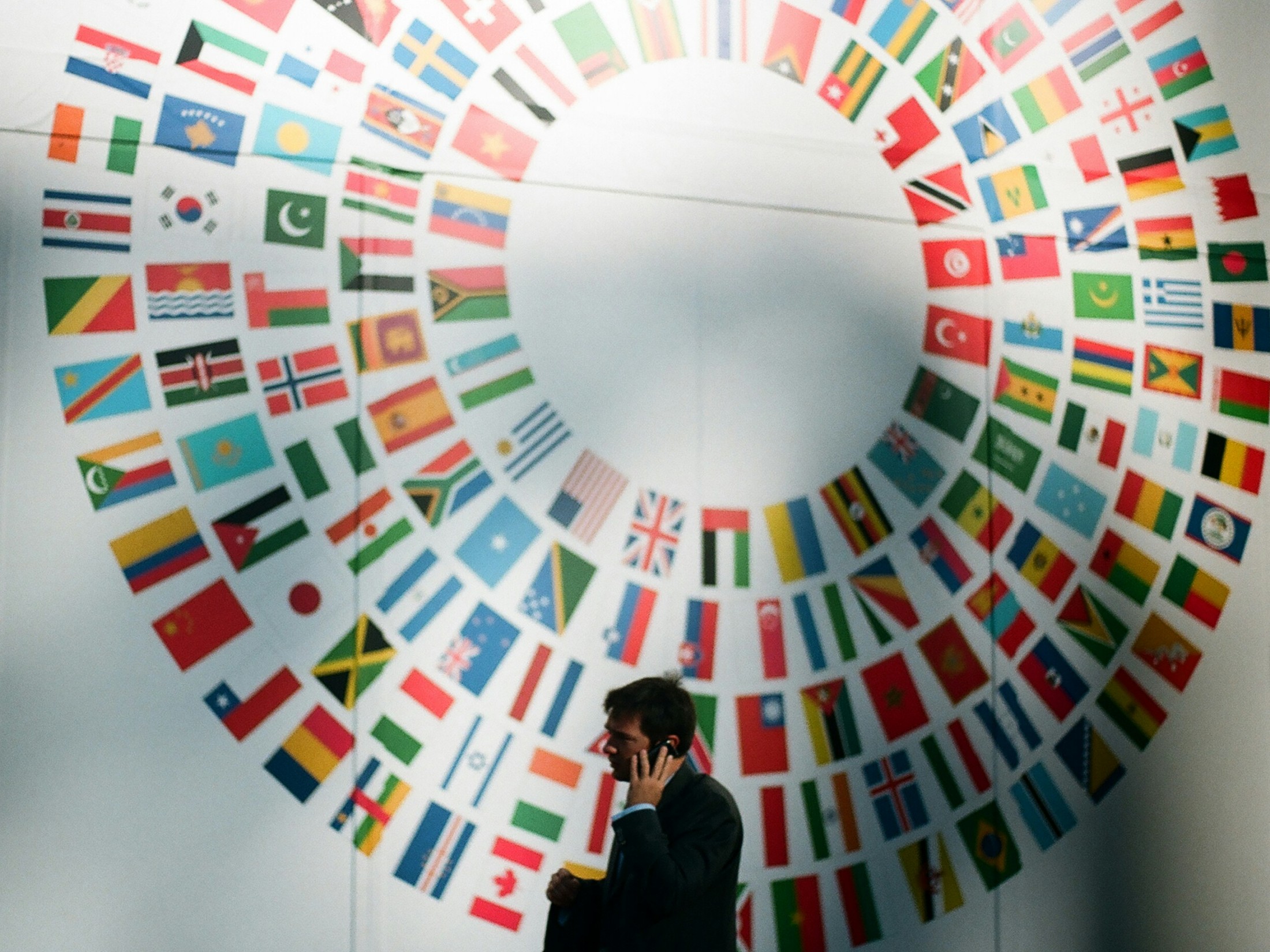
Generative AI is reshaping global competition and geopolitics, presenting challenges and opportunities for nations and businesses alike.
Senior figures from Boston Consulting Group (BCG) and its tech division, BCG X, discussed the intricate dynamics of the global AI race, the dominance of superpowers like the US and China, the role of emerging “middle powers,” and the implications for multinational corporations.
AI investments expose businesses to increasingly tense geopolitics
Sylvain Duranton, Global Leader at BCG X, noted the significant geopolitical risk companies face: “For large companies, close to half of them, 44%, have teams around the world, not just in one country where their headquarters are.”

Many of these businesses operate across numerous countries, making them vulnerable to differing regulations and sovereignty issues. “They’ve built their AI teams and ecosystem far before there was such tension around the world.”
Duranton also pointed to the stark imbalance in the AI supply race, particularly in investment.
Comparing the market capitalisation of tech companies, the US dwarfs Europe by a factor of 20 and the Asia Pacific region by five. Investment figures paint a similar picture, showing a “completely disproportionate” imbalance compared to the relative sizes of the economies.
This AI race is fuelled by massive investments in compute power, frontier models, and the emergence of lighter, open-weight models changing the competitive dynamic.
Benchmarking national AI capabilities
Nikolaus Lang, Global Leader at the BCG Henderson Institute – BCG’s think tank – detailed the extensive research undertaken to benchmark national GenAI capabilities objectively.
The team analysed the “upstream of GenAI,” focusing on large language model (LLM) development and its six key enablers: capital, computing power, intellectual property, talent, data, and energy.
Using hard data like AI researcher numbers, patents, data centre capacity, and VC investment, they created a comparative analysis. Unsurprisingly, the analysis revealed the US and China as the clear AI frontrunners and maintain leads in geopolitics.

The US boasts the largest pool of AI specialists (around half a million), immense capital power ($303bn in VC funding, $212bn in tech R&D), and leading compute power (45 GW).
Lang highlighted America’s historical dominance, noting, “the US has been the largest producer of notable AI models with 67%” since 1950, a lead reflected in today’s LLM landscape. This strength is reinforced by “outsized capital power” and strategic restrictions on advanced AI chip access through frameworks like the US AI Diffusion Framework.
China, the second AI superpower, shows particular strength in data—ranking highly in e-governance and mobile broadband subscriptions, alongside significant data centre capacity (20 GW) and capital power.
Despite restricted access to the latest chips, Chinese LLMs are rapidly closing the gap with US models. Lang mentioned the emergence of models like DeepSpeech as evidence of this trend, achieved with smaller teams, fewer GPU hours, and previous-generation chips.
China’s progress is also fuelled by heavy investment in AI academic institutions (hosting 45 of the world’s top 100), a leading position in AI patent applications, and significant government-backed VC funding. Lang predicts “governments will play an important role in funding AI work going forward.”
The middle powers: Europe, Middle East, and Asia
Beyond the superpowers, several “middle powers” are carving out niches.
EU: While trailing the US and China, the EU holds the third spot with significant data centre capacity (8 GW) and the world’s second-largest AI talent pool (275,000 specialists) when capabilities are combined. Europe also leads in top AI publications. Lang stressed the need for bundled capacities, suggesting AI, defence, and renewables are key areas for future EU momentum.
Middle East (UAE & Saudi Arabia): These nations leverage strong capital power via sovereign wealth funds and competitively low electricity prices to attract talent and build compute power, aiming to become AI drivers “from scratch”. They show positive dynamics in attracting AI specialists and are climbing the ranks in AI publications.
Asia (Japan & South Korea): Leveraging strong existing tech ecosystems in hardware and gaming, these countries invest heavily in R&D (around $207bn combined by top tech firms). Government support, particularly in Japan, fosters both supply and demand. Local LLMs and strategic investments by companies like Samsung and SoftBank demonstrate significant activity.
Singapore: Singapore is boosting its AI ecosystem by focusing on talent upskilling programmes, supporting Southeast Asia’s first LLM, ensuring data centre capacity, and fostering adoption through initiatives like establishing AI centres of excellence.
The geopolitics of generative AI: Strategy and sovereignty
The geopolitics of generative AI is being shaped by four clear dynamics: the US retains its lead, driven by an unrivalled tech ecosystem; China is rapidly closing the gap; middle powers face a strategic choice between building supply or accelerating adoption; and government funding is set to play a pivotal role, particularly as R&D costs climb and commoditisation sets in.
As geopolitical tensions mount, businesses are likely to diversify their GenAI supply chains to spread risk. The race ahead will be defined by how nations and companies navigate the intersection of innovation, policy, and resilience.
(Photo by Markus Krisetya)
See also: OpenAI counter-sues Elon Musk for attempts to ‘take down’ AI rival

Want to learn more about AI and big data from industry leaders? Check out AI & Big Data Expo taking place in Amsterdam, California, and London. The comprehensive event is co-located with other leading events including Intelligent Automation Conference, BlockX, Digital Transformation Week, and Cyber Security & Cloud Expo.
Explore other upcoming enterprise technology events and webinars powered by TechForge here.
