



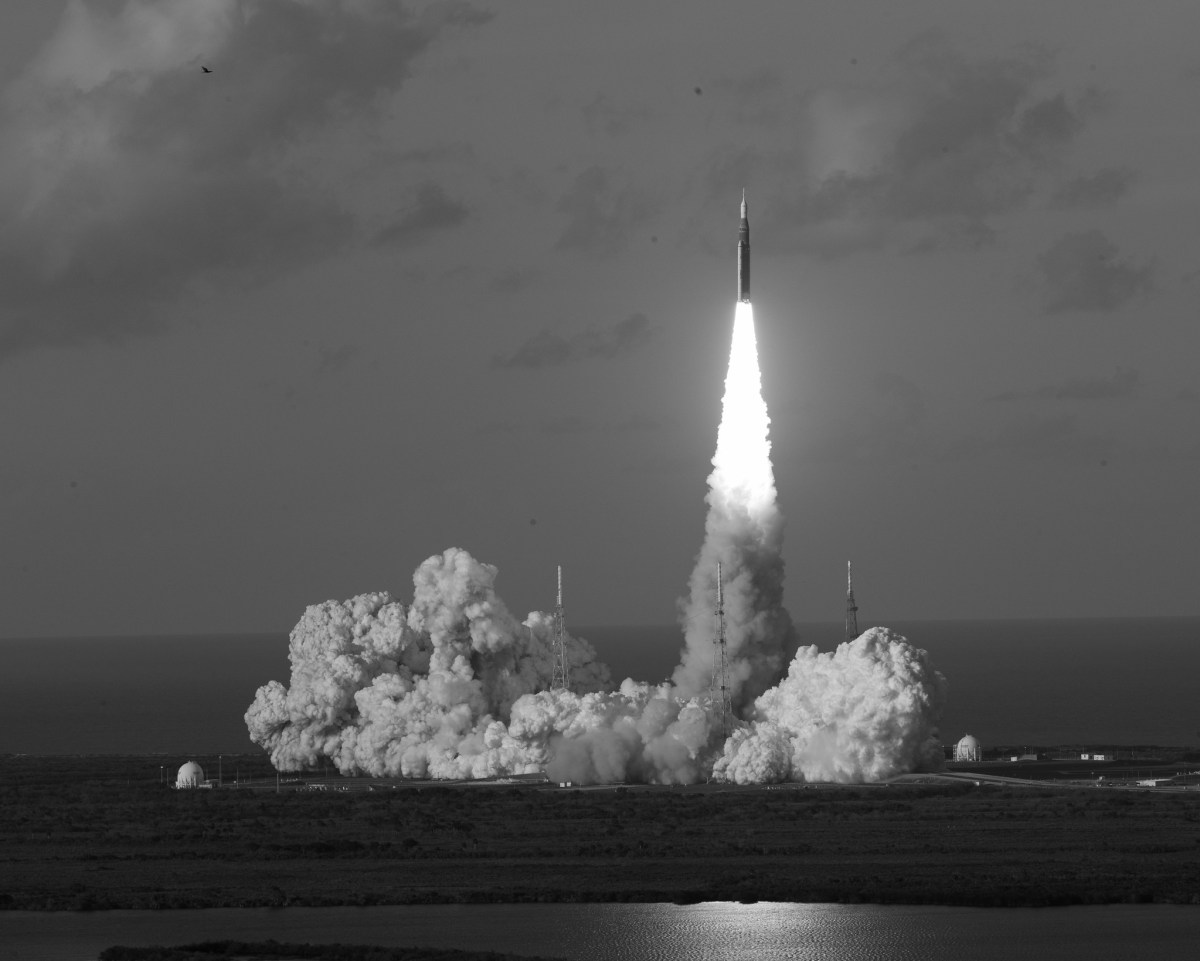
SpaceX launched its IPO on the same day the U.S. sent astronauts to the moon for the first time in 54 years. And the timing is appropriate: This is likely the last time NASA will try to send people to deep space without major assistance from a company that emerged from the venture-backed tech scene.
The origins of NASA’s current lunar campaign trace a complicated path back to the second Bush administration, which began developing an enormous rocket and a spacecraft called Orion to return to the moon. By 2010, the project had grown over budget and was pared back — and paired with a new program to back private companies building new orbital rockets.
That decision led to a company-saving contract for SpaceX and a rush of venture capital into extraterrestrial technology, and to the Space Launch System (SLS) rocket that is now carrying three Americans and one Canadian around the moon and back.
The SLS is the most powerful operational rocket in the world today. It has flown just once before, when it launched an empty Orion spacecraft on a test flight around the moon in preparation for this week’s historic mission, which will set a record for the furthest humans have gone into the solar system.
Next time around, however, the pressure will be on SpaceX or Jeff Bezos’ Blue Origin. The two companies are competing to see who will put boots on the lunar regolith.
SLS and Orion were built by NASA’s legacy contractors, Boeing and Lockheed Martin, with a boost from Europe’s Airbus Defense and Space. They were also costly, delayed, and over budget, while SpaceX was flying a fleet of cheap reusable rockets and kicking off a massive cycle of investment into private space.
When NASA decided to head for the moon again in 2019, the agency felt it had to stick with the SLS and Orion.
Techcrunch event
San Francisco, CA
|
October 13-15, 2026
But there was a missing piece of the puzzle: A vehicle to transport astronauts from space down to the surface of the moon. That, NASA decided, would come from the new generation of venture-backed space firms. The agency also turned to a handful of private space companies to deploy robotic landers for reconnaissance and testing, including Firefly Aerospace and Intuitive Machines.
SpaceX bid to use its Starship rocket as a lander and, in 2021, won the job. It was a controversial decision. Getting the enormous vehicle to the moon will require a dozen or more launches in order to fill it with sufficient propellant for the journey. After years of waiting for the spacecraft, NASA chose to push back an attempt to land on the moon and rejigger its program.
“This is an architecture that no NASA administrator that I’m aware of would have selected had they had the choice,” former NASA administrator Jim Bridenstine told Congress last year, noting that the decision had been made without a Senate-confirmed leader at the agency.
Blue Origin was added to the roster in 2023 to build its own human landing system.
Now, the agency is apparently planning a bake-off: In 2027, NASA will test the ability of Orion to rendezvous with one or both landers in orbit, ahead of two potential landings in 2028. That will put added scrutiny on SpaceX’s next Starship test, which could occur this month, and Blue Origin’s plans to test out its lander on the moon sometime this year.
This year, there’s been a major overhaul of the program under the new NASA administrator, billionaire payments entrepreneur Jared Isaacman, who paid SpaceX to fly on two space missions and was promoted by Musk as the right candidate for administrator. After being nominated for the job by President Donald Trump, having his nomination pulled, and being renominated, he entered office in late 2025 facing a series of difficult choices about how to return to the moon.
In March, Isaacman scrapped plans, long seen as wasteful or politically motivated by outside observers, to build a lunar space station called Gateway, and to invest in expensive upgrades for SLS. Now, he’s all in on the new generation of private space companies.
With China, however, on its own disciplined path to put one of its citizens on the moon by 2030, any delays or missteps will be seen in a geopolitical light. Silicon Valley has thus far failed to beat Chinese companies in the physical realms of electric cars or robotics. SpaceX has become the company entrepreneurs across the Pacific seek to emulate, but in heading for the moon, Silicon Valley will have a chance to show it can still own the technology frontier.
