


Close Menu
RoboNewsWire – Latest Insights on AI, Robotics, Crypto and Tech Innovations
  • Home
  • AI
  • Crypto
  • Cybersecurity
  • IT
  • Energy
  • Robotics
  • TechCrunch
  • Technology
What's Hot

Investors trust Google more than Meta when comes to spending on AI

April 30, 2026

Paragon is not collaborating with Italian authorities probing spyware attacks, report says

April 28, 2026

Microsoft cuts OpenAI revenue share as their AI alliance loosens

April 28, 2026
Facebook X (Twitter) Instagram
Trending
  • Investors trust Google more than Meta when comes to spending on AI
  • Paragon is not collaborating with Italian authorities probing spyware attacks, report says
  • Microsoft cuts OpenAI revenue share as their AI alliance loosens
  • Robotically assembled building blocks could make construction more efficient and sustainable | MIT News
  • AI showdown: Musk and Altman go to trial in fight over OpenAI’s beginnings
  • U.S., Iran seize ships as war evolves into standoff over Strait of Hormuz
  • Google launches training and inference TPUs in latest shot at Nvidia
  • Zoom teams up with World to verify humans in meetings
  • Home
  • About Us
  • Advertise
  • Contact Us
  • DMCA
  • Privacy Policy
  • Terms & Conditions
Facebook X (Twitter) Instagram
RoboNewsWire – Latest Insights on AI, Robotics, Crypto and Tech InnovationsRoboNewsWire – Latest Insights on AI, Robotics, Crypto and Tech Innovations
Tuesday, May 12
  • Home
  • AI
  • Crypto
  • Cybersecurity
  • IT
  • Energy
  • Robotics
  • TechCrunch
  • Technology
RoboNewsWire – Latest Insights on AI, Robotics, Crypto and Tech Innovations
Home » DACLab says it can remove CO2 using less electricity than many competitors

DACLab says it can remove CO2 using less electricity than many competitors

GTBy GTSeptember 20, 2025 TechCrunch No Comments3 Mins Read
Share
Facebook Twitter LinkedIn Pinterest Email


The world’s countries may have pledged to cut its carbon pollution, but with global emissions reaching an all-time high last year, they’ve fallen far short.

Digging out of that hole is going to require removing carbon straight from the atmosphere. But it comes with a hefty price tag, mostly because of the energy required. Removing one metric ton of CO2 using direct air capture is expected to require around 2,000 kWh of energy when the technology is sorted and scaled up. 

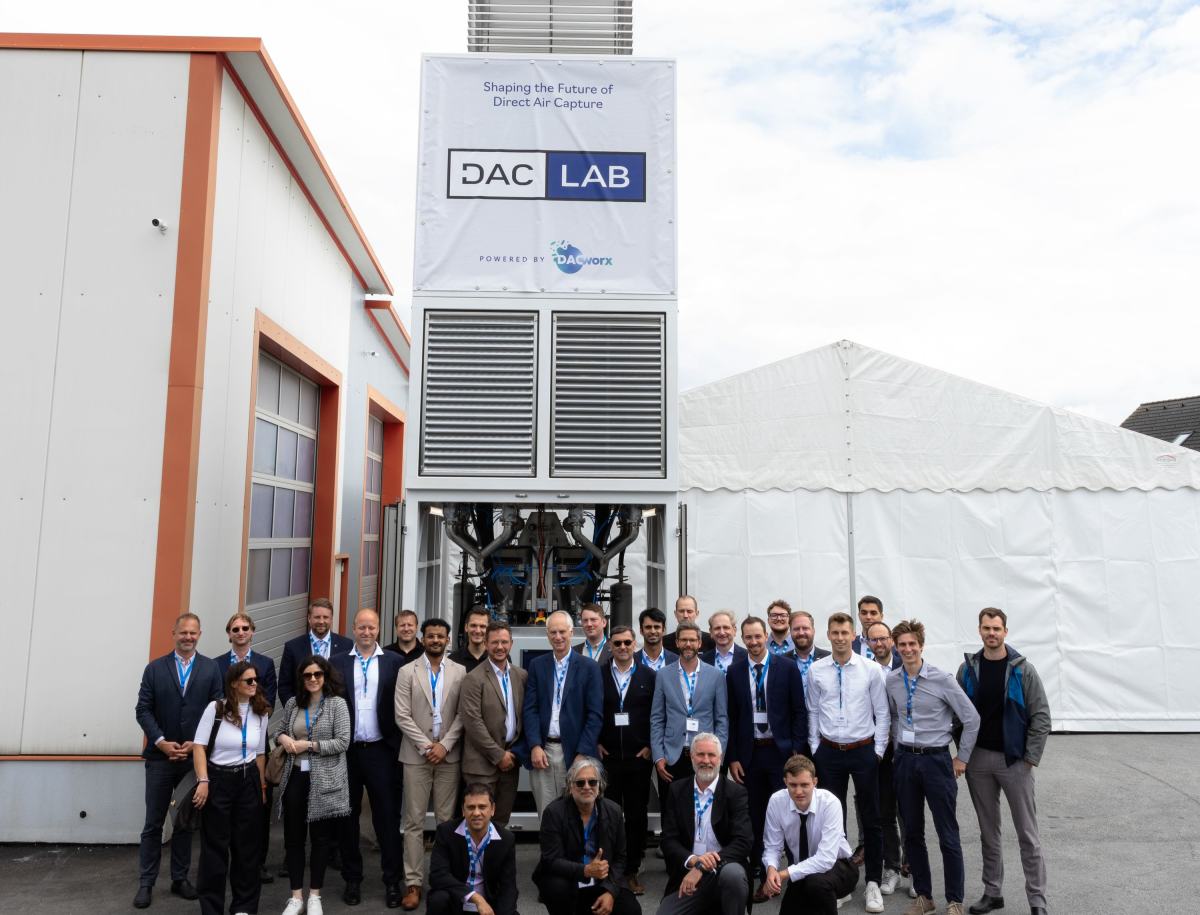
One startup called DACLab says it’s already doing it for less, though. “We have data that I can share with you at 1,500 kilowatt hours per [metric] ton,” said Aditya Bhandari, co-founder and CEO of DACLab, told TechCrunch.

DACLab, which has been operating stealthily for the last four years, emerged today with $3 million in seed funding, the company exclusively told TechCrunch. The round was led by early Discord investor Peter Relan with participation from Silver Lake co-founder Dave Roux, WovenEarth Ventures founder Jane Woodward, and others.

In most direct air capture schemes, air is blown over a solid material capable of absorbing carbon dioxide. As the material saturates, the carbon dioxide needs to be released so it can be drawn off and stored elsewhere. The process of releasing the CO2 tends to be energy intensive, though, frequently involving heat around 80°C to 120°C. (Liquid sorbents require even more heat.)

To minimize construction costs, many startups perform the capture and release steps in the same box. DACLab, on the other hand, separates the two, capturing in one place and releasing carbon dioxide in another. The heat is relatively low for a solid sorbent, around 70°C, Bhandari said.

The bifurcated setup is typically found at industrial sites, which have more concentrated exhaust streams. DACLab’s technology was repurposed from such industrial designs. (Another startup, Global Thermostat, which was recently sold for parts, also had used a split design.)

Techcrunch event

San Francisco
|
October 27-29, 2025

DACLab’s technology comes from TU Wien in Austria, where a partnership with Shell had produced a point-source carbon capture unit that ran for nearly three years. “This is very unusual, when you compare it with a lot of these other director capture research groups,” Bhandari said, noting that it was the largest carbon capture facility in Austria at the time.

The startup took that technology and tweaked it for direct air capture duty. DACLab has built two units capable of capturing 100 metric tons per year, and it has plans to build versions capable of capturing 1,000 and 5,000 metric tons per year. The former will first be deployed in Washington state, while the latter will be installed in Kenya. 

The company sells its 100-metric ton unit for under $500,000, Bhandari said. Eventually, DACLab hopes to supply units to oil and gas companies, carbon project developers, and companies making e-fuels for airplanes.

Ultimately, much of the cost of carbon capture will depend on how much energy it uses. DACLab has plans to reduce consumption further to less than 1,000 kWh per metric ton. If that happens, the company says it will be able to capture carbon dioxide for $250 per metric ton.

“We’re not going to be one of those director capture companies that promise you that we are going to reach $100 per [metric] ton today,” Bhandari said. “Hopefully we can reboot this much needed industry, because it is filled with a lot of, I would say, empty promises.”

Correction: Experts estimate DAC will require around 2,000 kWh of total energy (heat and electricity).


Source link

GT
  • Website

Keep Reading

Paragon is not collaborating with Italian authorities probing spyware attacks, report says

Zoom teams up with World to verify humans in meetings

Hackers are abusing unpatched Windows security flaws to hack into organizations

‘Tokenmaxxing’ is making developers less productive than they think

Sources: Cursor in talks to raise $2B+ at $50B valuation as enterprise growth surges

Kevin Weil and Bill Peebles exit OpenAI as company continues to shed ‘side quests’

Add A Comment
Leave A Reply Cancel Reply

Editors Picks

Investors trust Google more than Meta when comes to spending on AI

April 30, 2026

Google launches training and inference TPUs in latest shot at Nvidia

April 27, 2026

Meta tracks employee usage on Google, LinkedIn AI training project

April 25, 2026

Meta will cut 10% of workforce as company pushes deeper into AI

April 24, 2026
Latest Posts

Malicious Chrome Extension Steal ChatGPT and DeepSeek Conversations from 900K Users

April 1, 2026

Top 10 Best Server Monitoring Tools

April 1, 2026

10 Best Cybersecurity Risk Management Tools

March 31, 2026

Subscribe to News

Subscribe to our newsletter and never miss our latest news

Subscribe my Newsletter for New Posts & tips Let's stay updated!

Welcome to RoboNewsWire, your trusted source for cutting-edge news and insights in the world of technology. We are dedicated to providing timely and accurate information on the most important trends shaping the future across multiple sectors. Our mission is to keep you informed and ahead of the curve with deep dives, expert analysis, and the latest updates in key industries that are transforming the world.

Subscribe to Updates

Subscribe to our newsletter and never miss our latest news

Subscribe my Newsletter for New Posts & tips Let's stay updated!

Facebook X (Twitter) Instagram
  • Home
  • About Us
  • Advertise
  • Contact Us
  • DMCA
  • Privacy Policy
  • Terms & Conditions
© 2026 Robonewswire. Designed by robonewswire.

Type above and press Enter to search. Press Esc to cancel.