


Close Menu
RoboNewsWire – Latest Insights on AI, Robotics, Crypto and Tech Innovations
  • Home
  • AI
  • Crypto
  • Cybersecurity
  • IT
  • Energy
  • Robotics
  • TechCrunch
  • Technology
What's Hot

Investors trust Google more than Meta when comes to spending on AI

April 30, 2026

Paragon is not collaborating with Italian authorities probing spyware attacks, report says

April 28, 2026

Microsoft cuts OpenAI revenue share as their AI alliance loosens

April 28, 2026
Facebook X (Twitter) Instagram
Trending
  • Investors trust Google more than Meta when comes to spending on AI
  • Paragon is not collaborating with Italian authorities probing spyware attacks, report says
  • Microsoft cuts OpenAI revenue share as their AI alliance loosens
  • Robotically assembled building blocks could make construction more efficient and sustainable | MIT News
  • AI showdown: Musk and Altman go to trial in fight over OpenAI’s beginnings
  • U.S., Iran seize ships as war evolves into standoff over Strait of Hormuz
  • Google launches training and inference TPUs in latest shot at Nvidia
  • Zoom teams up with World to verify humans in meetings
  • Home
  • About Us
  • Advertise
  • Contact Us
  • DMCA
  • Privacy Policy
  • Terms & Conditions
Facebook X (Twitter) Instagram
RoboNewsWire – Latest Insights on AI, Robotics, Crypto and Tech InnovationsRoboNewsWire – Latest Insights on AI, Robotics, Crypto and Tech Innovations
Wednesday, May 13
  • Home
  • AI
  • Crypto
  • Cybersecurity
  • IT
  • Energy
  • Robotics
  • TechCrunch
  • Technology
RoboNewsWire – Latest Insights on AI, Robotics, Crypto and Tech Innovations
Home » Natron’s liquidation shows why the US isn’t ready to make its own batteries

Natron’s liquidation shows why the US isn’t ready to make its own batteries

GTBy GTSeptember 6, 2025 TechCrunch No Comments3 Mins Read
Share
Facebook Twitter LinkedIn Pinterest Email


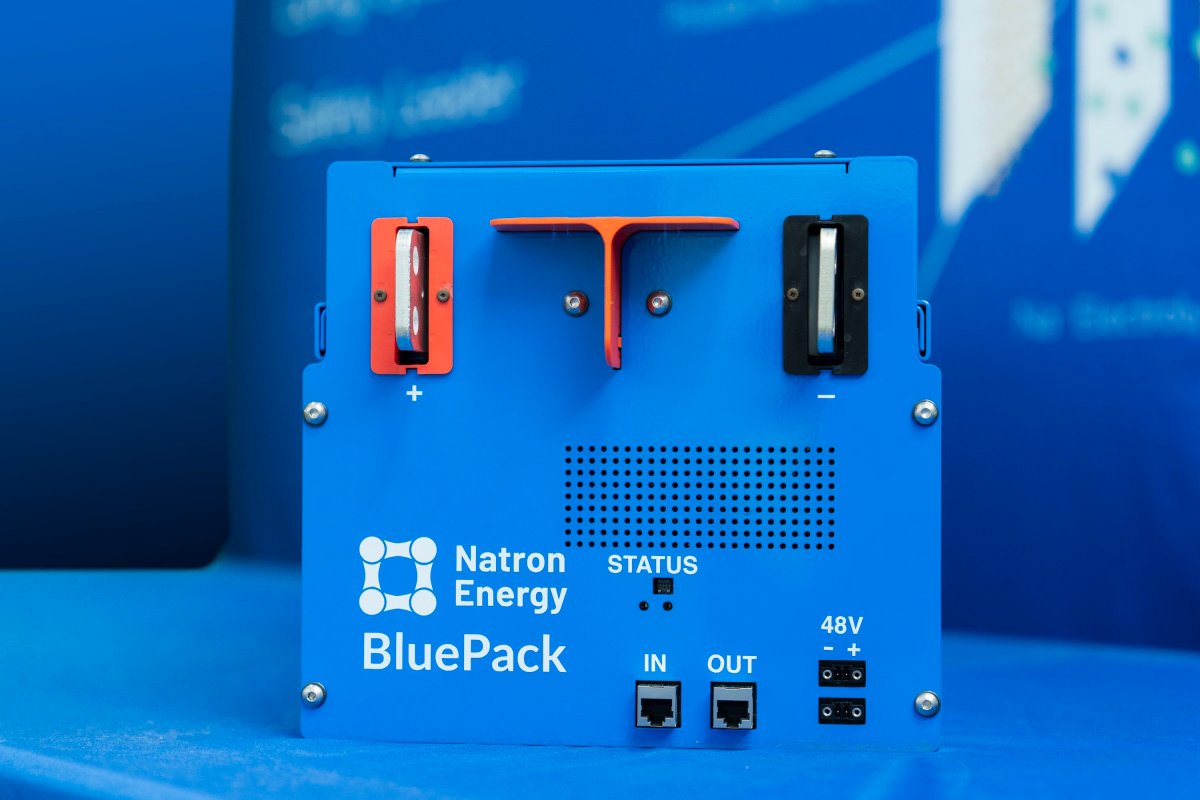
Sodium-ion battery startup Natron ceased operations this week, ending the company’s 12-year quest to commercialize its technology in the U.S.

The company had $25 million worth of orders lined up for its Michigan factory, but it couldn’t deliver them until it had UL certification, according to Raleigh’s The News & Observer, which reported on the business’s closure because Natron had been planning to bring jobs to the state of North Carolina with its new factory.

However, receiving the UL certification can be a lengthy process, often spanning several months. Natron investors balked at releasing more funds, leaving the startup facing a cash crunch.

Natron’s primary shareholder, Sherwood Partners, attempted to sell its stake but found no buyers. As a result, it’s liquidating the company and laying off all but a small number of employees, who will oversee the wind-down of operations. 

The closure is an example of the challenges that come with trying to manufacture batteries without consistent industrial policies. The road from startup to gigafactory often takes a decade or more — a journey that lasts longer than most business cycles — and certainly longer than most investor fads.

Natron is being carved up through a process known as “assignment for the benefit of creditors,” an alternative to Chapter 7 bankruptcy that could result in a speedy — and quiet — sale of assets that forgoes the court proceedings that many liquidations follow.

The company had announced a year ago that it would build a much larger, $1.4 billion sodium-ion battery factory in North Carolina capable of producing gigawatt-hours’ worth of cells per year, creating as many as 1,000 jobs. Natron had focused on stationary storage and data center customers, markets where sodium ion’s lower energy density isn’t as much of a concern.

While sodium-ion batteries have the potential to be significantly cheaper than their lithium-ion competitors owing to sodium’s abundance, their potential has been undercut by a lithium price war in China. In the last two and a half years, the price of lithium carbonate has cratered, dropping 90%, according to Benchmark Mineral Intelligence.

Natron is only the latest casualty in a string of recent attempts to manufacture large quantities of batteries outside of Asia.

In June, Oregon-based Powin filed for Chapter 11 bankruptcy as it failed to find a non-Chinese supplier of lithium-iron-phosphate cells. The company used the cells to assemble grid-scale batteries.

Earlier this year, Swedish battery manufacturer Northvolt also filed for bankruptcy in its home country, ending the journey for Europe’s best chance at a homegrown competitor. The company was reportedly burning through $100 million a month as it struggled to master large-scale manufacturing. BMW canceled a $2 billion contract in June 2024 because of Northvolt’s inability to deliver.

The string of failures highlights the difficulty of building battery companies outside Asia, which has, over the decades, developed both mature supply chains and companies with vast expertise. 

If the U.S. or Europe is to succeed in creating domestic challengers to the Asian battery giants, it’ll take sustained government support for a decade or more, not the whipsawing that has defined the last 15 years. Given political realities, joint ventures with companies like Panasonic, LG Energy Solution, and SK Innovation are more likely to succeed.

For the foreseeable future, the West’s best chance at domestic battery manufacturing still runs through Asia.


Source link

GT
  • Website

Keep Reading

Paragon is not collaborating with Italian authorities probing spyware attacks, report says

Zoom teams up with World to verify humans in meetings

Hackers are abusing unpatched Windows security flaws to hack into organizations

‘Tokenmaxxing’ is making developers less productive than they think

Sources: Cursor in talks to raise $2B+ at $50B valuation as enterprise growth surges

Kevin Weil and Bill Peebles exit OpenAI as company continues to shed ‘side quests’

Add A Comment
Leave A Reply Cancel Reply

Editors Picks

Investors trust Google more than Meta when comes to spending on AI

April 30, 2026

Google launches training and inference TPUs in latest shot at Nvidia

April 27, 2026

Meta tracks employee usage on Google, LinkedIn AI training project

April 25, 2026

Meta will cut 10% of workforce as company pushes deeper into AI

April 24, 2026
Latest Posts

Malicious Chrome Extension Steal ChatGPT and DeepSeek Conversations from 900K Users

April 1, 2026

Top 10 Best Server Monitoring Tools

April 1, 2026

10 Best Cybersecurity Risk Management Tools

March 31, 2026

Subscribe to News

Subscribe to our newsletter and never miss our latest news

Subscribe my Newsletter for New Posts & tips Let's stay updated!

Welcome to RoboNewsWire, your trusted source for cutting-edge news and insights in the world of technology. We are dedicated to providing timely and accurate information on the most important trends shaping the future across multiple sectors. Our mission is to keep you informed and ahead of the curve with deep dives, expert analysis, and the latest updates in key industries that are transforming the world.

Subscribe to Updates

Subscribe to our newsletter and never miss our latest news

Subscribe my Newsletter for New Posts & tips Let's stay updated!

Facebook X (Twitter) Instagram
  • Home
  • About Us
  • Advertise
  • Contact Us
  • DMCA
  • Privacy Policy
  • Terms & Conditions
© 2026 Robonewswire. Designed by robonewswire.

Type above and press Enter to search. Press Esc to cancel.