



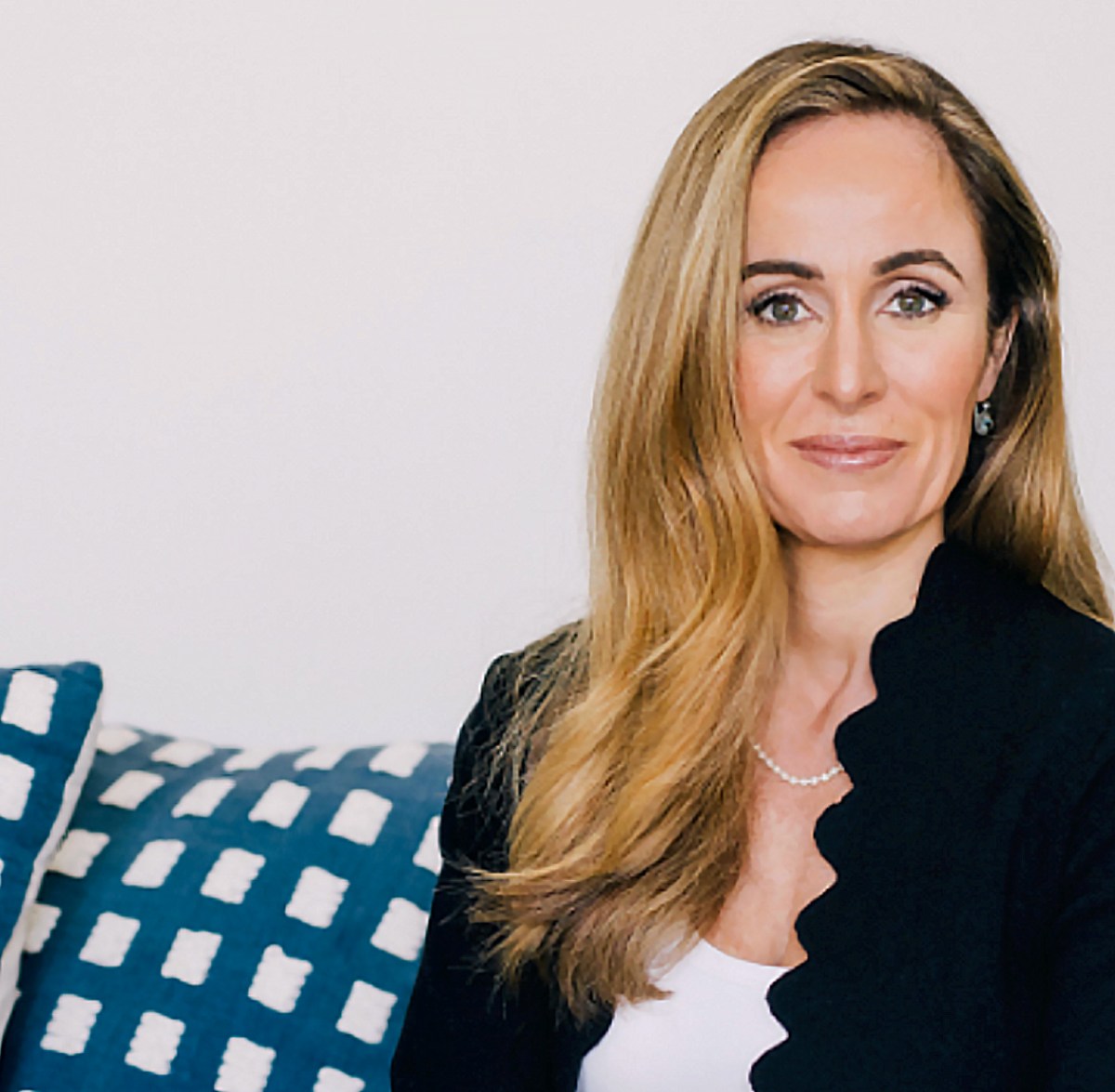
Dorothy Kilroy has seen her company’s smart ring on some very famous fingers. Mark Zuckerberg wears one. So does Jack Dorsey. Prince Harry, too. But when Oura‘s chief commercial officer sat down at Toronto’s Elevate conference with this editor last week, she surprised me, saying the company’s fastest-growing user segment isn’t tech billionaires or wellness-obsessed execs. It’s women in their early twenties.
It highlighted what an interesting moment this is for Oura. The 13-year-old Finnish health tech company essentially invented the smart ring category and turned it into a billion-dollar business. But now competitors are circling, including Samsung with its Galaxy Ring, Ultrahuman with its no-subscription pitch, and Whoop with its athletic performance mystique. Each one promises to take a bite out of Oura’s lead.
The question isn’t whether Oura is winning right now – with 80% of the smart ring market, clearly, it is. The question is whether it can maintain that lead as the wearables market splinters across demographics and use cases, and behind that, whether Oura even needs to capture every demographic to succeed.
Kilroy spent eight years at Airbnb before joining Oura three years ago, and she has watched both companies expand the same way – through word of mouth. At Airbnb, 90% of the company’s revenue ties directly to people raving about their vacations, she suggested; at Oura, it’s people raving about their sleep scores.
That organic enthusiasm is particularly strong among so-called corporate athletes, or high-performing professionals trying to optimize their health to stay sharp. These are people who’ve realized that running on fumes isn’t actually a sustainable career strategy or, as Kilroy described them on stage, “people who are trying to be the best at their game. They want to make sure their sleep is dialed in. They want to know how to exercise. They want to look after their metabolic health.”
It’s a demographic – largely millennials and Gen Xers with disposable income – that has made Oura wildly successful. The company has said it doubled its revenue last year and is on track to double it again this year. More impressive, says Kilroy, Oura’s retention at the 12-month mark hits the high 80s, while other wearables languish in the low 30s. People actually keep wearing the thing.
There is a new wrinkle, however. While Oura has captured the professional class, younger consumers, particularly young men obsessed with gains and recovery, are gravitating elsewhere. The Whoop fitness band, for example, has seemingly become the unofficial uniform of serious athletes and gym bros.
Techcrunch event
San Francisco
|
October 27-29, 2025
The competition got a little spicy a couple of weeks ago. Whoop, founded in Boston 13 years ago, announced a new blood-testing service just one day before Oura announced its own blood testing partnership with Quest Diagnostics. When asked about the timing, Kilroy focused instead on the value that Oura brings to members. But the near-simultaneous rollout suggests both companies see the same future: integrating wearable data with actual clinical biomarkers.
Then there’s Ultrahuman, playing the scrappy underdog. At $349 (often $299 on sale), it costs the same upfront as an Oura but ditches the $5.99 monthly subscription that Oura charges its users. Though very similar looking, reviewers generally prefer Oura’s polish and design. Still, that “no subscription” pitch resonates with some younger buyers who already have subscription fatigue because of their Netflix, Spotify, and other monthly charges.
Kilroy shrugs off the concern that Oura will lose customers to price-sensitive buyers. “When you’re introducing a new pricing model, there’s always risk,” she said on stage, then she pointed back to those retention numbers. “Our members are getting a lot of value from [our product] and [are] happy to continue to pay.”
In fact, Kilroy doesn’t seem particularly worried about capturing every demographic. Instead, she’s focused on keeping Oura’s core users happy while organically attracting new segments. And young women are becoming part of that core market – a trend that she credits to a broader shift, though Oura is also mindful of the opportunity it presents. “We see that they’re drinking less alcohol,” said Kilroy. “They’re really focused on their mental health.”
That momentum has pushed Oura to double down on features like cycle tracking and fertility insights. “Because of our accuracy of temperature, we have a very high degree of accuracy in detecting ovulation, almost 97%,” Kilroy explained. The company also recently rolled out perimenopause features and expanded pregnancy capabilities.
Put another way, Oura is – for now, at least – more focused on serving its growing female base rather than chasing young male athletes counting their VO2 max. As Kilroy told me: “We’re not a fitness tracker only. We’re a health platform . . . Where we’re really focused on is preventative health so that we avoid burnout, that we avoid illness, [and] we’re getting early detection on really important clinical and health-related diseases.”
As Kilroy learned at Airbnb, she said, “You keep your eyes focused on your own race and the features and the products that you ship.”
It’s a smart play. The market for people wanting to optimize sleep, manage stress, and generally not feel terrible is arguably a lot bigger than the market for athletes obsessing over training load.
The numbers support the strategy, too. Oura now sells through 4,000 retail stores and has 1,000 partners tapped into its API. Kilroy says it also employs over 30 PhDs and MDs and that it partners with research heavyweights like UCSF, UC Berkeley, and Stanford. That level of clinical validation creates a moat that competitors can’t easily replicate.
Blood testing is just one vector. Late last year, Oura partnered with a maker of wearables that track blood-sugar levels — Dexcom — on metabolic health monitoring, letting users overlay continuous glucose data with their ring metrics. Kilroy tested it herself for nine months. “I could not believe how much stress was impacting it,” she said, describing glucose spikes during particularly brutal meetings. “All I want to do is run and grab a pound of chocolate when I’m stressed,” she added, smiling. “And that’s almost like putting a bomb on top of your already high blood glucose.”
Oura’s growth hasn’t been all positive PR. This summer, the company caught heat over a $96 million deal to sell rings to the Department of Defense, with security provided by the software and analytics outfit Palantir. Privacy advocates raised concerns about surveillance and data sharing – which is reasonable when you’re dealing with biometric data and defense contracts.
But on stage, Kilroy was firm. “We do not pass our member data to the U.S. government,” she said. “When we are working with the U.S. government and the data that they are researching on their own troops in the Army or in the Air Force, that data is passed to them.”
Asked what Oura had learned from this financial-win-turned-public-relations disaster, Kilroy added, “There’s a lot of misinformation out there, and it’s often hard once that misinformation starts to take hold to put the genie back in the bottle.”
The DoD controversy clarifies something important: when a device is tracking your sleep, your fertility, your stress spikes during the workday – when it knows your body better than you do – trust is paramount. Oura’s retention numbers say people trust them; the backlash this summer underscored that trust is fragile. Which makes the company’s refusal to chase every shiny demographic look less like playing it safe and more like discipline.
So can Oura capture all of Gen Z? Probably not. But maybe that’s fine. While rivals like Whoop corner certain markets like athletic performance, Oura’s betting there are more people trying to avoid burnout than athletes obsessing over recovery metrics. And right now, at least, it looks like nobody’s switching rings to prove the company wrong.
