


Close Menu
RoboNewsWire – Latest Insights on AI, Robotics, Crypto and Tech Innovations
  • Home
  • AI
  • Crypto
  • Cybersecurity
  • IT
  • Energy
  • Robotics
  • TechCrunch
  • Technology
What's Hot

Investors trust Google more than Meta when comes to spending on AI

April 30, 2026

Paragon is not collaborating with Italian authorities probing spyware attacks, report says

April 28, 2026

Microsoft cuts OpenAI revenue share as their AI alliance loosens

April 28, 2026
Facebook X (Twitter) Instagram
Trending
  • Investors trust Google more than Meta when comes to spending on AI
  • Paragon is not collaborating with Italian authorities probing spyware attacks, report says
  • Microsoft cuts OpenAI revenue share as their AI alliance loosens
  • Robotically assembled building blocks could make construction more efficient and sustainable | MIT News
  • AI showdown: Musk and Altman go to trial in fight over OpenAI’s beginnings
  • U.S., Iran seize ships as war evolves into standoff over Strait of Hormuz
  • Google launches training and inference TPUs in latest shot at Nvidia
  • Zoom teams up with World to verify humans in meetings
  • Home
  • About Us
  • Advertise
  • Contact Us
  • DMCA
  • Privacy Policy
  • Terms & Conditions
Facebook X (Twitter) Instagram
RoboNewsWire – Latest Insights on AI, Robotics, Crypto and Tech InnovationsRoboNewsWire – Latest Insights on AI, Robotics, Crypto and Tech Innovations
Tuesday, May 12
  • Home
  • AI
  • Crypto
  • Cybersecurity
  • IT
  • Energy
  • Robotics
  • TechCrunch
  • Technology
RoboNewsWire – Latest Insights on AI, Robotics, Crypto and Tech Innovations
Home » Starpath bets on mass-produced, space-rated solar

Starpath bets on mass-produced, space-rated solar

GTBy GTSeptember 26, 2025 TechCrunch No Comments4 Mins Read
Share
Facebook Twitter LinkedIn Pinterest Email


Ask Starpath CEO Saurav Shroff his thoughts on America’s space priorities and he’ll say we’re “one order of magnitude high on cost and one order of magnitude low on ambition.” 

Starpath’s answer, at least to part of the problem, is ultra-low-cost space power, which is generated by solar panels.

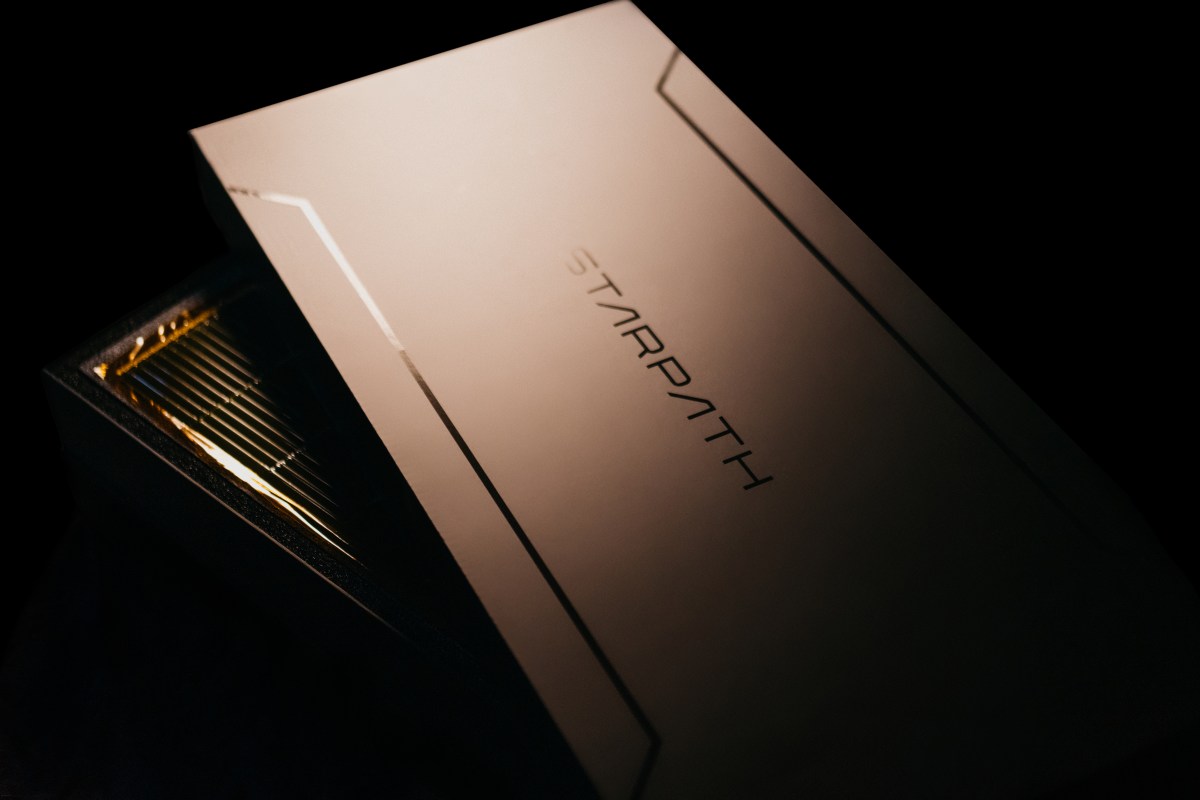
Starpath’s new space-rated solar panel business kicked off sales in the U.S. on September 25 with an eyebrow-raising pitch. The company says its solar panels, called “Starlight,” are priced around 10 times cheaper than typical industry pricing of $75-250 per watt, roughly a 90% cost reduction versus the status quo.

There will be two product tiers at launch, an “engineering model” and a “flight model.” The engineering model is priced at $9.81 per watt, with shipping beginning the second week of October. This model goes through a streamlined testing process, but is not flight-rated, making it suited for prototyping, lab use, and building a satellite ahead of launch, a Starpath representative said.

The flight model, designed for in-space use, is $11.20 per watt and is slated to ship in the fourth quarter of this year.

The startup says the steep cost reduction comes in part from building its own automated production line.

That production process — details of which Starpath is largely keeping private — is designed to dramatically increase throughput. By next year, the startup claims its line could produce more than the rest of the world’s supply of space-rated solar power combined, with enough capacity to service every satellite made on Earth.

Techcrunch event

San Francisco
|
October 27-29, 2025

“It’s a win for humanity if our solar panels are available commercially for the entire space industry at a price that is 90% cheaper than what you can get today,” Shroff said. Panels “won’t be made to order … they’ll be stocked.” Shipping times will be as short as three weeks to the customer’s door initially, and just three days from December onward. It’s a dramatic reduction from today’s five- to 14-month lead times, Starpath says.

The new product line grew out of Starpath’s broader ambition: to terraform the solar system, starting with the moon and Mars. When the team priced power for a serious lunar base, “the current solar solutions were not economically viable,” Shroff said. “You’d literally be looking at spending more than the GDP of the entire world on solar power” to scale today’s satellite-supply-chain economics.

“The economics sort of kind of work for the satellite industry,” he said. “They’re very expensive, but they do not work for building a city on Mars.”

That prompted Starpath to design its own product and process. Shroff says the low prices mean “for a multimillion-dollar satellite … it will only cost you $100,000 to get the power system.”

Starpath’s roadmap is aggressive. Shroff said the underlying production system is designed to rapidly scale. “If demand called for it,” the company could scale to upwards of 40 megawatts “within a year,” he said.

Without naming names, Shroff said companies are interested in building applications for low Earth orbit that require a lot of power.

Selling panels, he argued, doesn’t distract from Starpath’s core mission. Instead, it monetizes a capability the company had to build anyway. Shroff pointed out that Starpath will be the consumer of around 98% of its own output, using the vast majority of its own panels for its off-world infrastructure.

“We think that people should dream bigger,” he said. “Everybody should take a careful look, particularly NASA, at their goals, and ask themselves if they’re dreaming big enough.”

The story has been updated to reflect that the system could scale to 40 megawatts.


Source link

GT
  • Website

Keep Reading

Paragon is not collaborating with Italian authorities probing spyware attacks, report says

Zoom teams up with World to verify humans in meetings

Hackers are abusing unpatched Windows security flaws to hack into organizations

‘Tokenmaxxing’ is making developers less productive than they think

Sources: Cursor in talks to raise $2B+ at $50B valuation as enterprise growth surges

Kevin Weil and Bill Peebles exit OpenAI as company continues to shed ‘side quests’

Add A Comment
Leave A Reply Cancel Reply

Editors Picks

Investors trust Google more than Meta when comes to spending on AI

April 30, 2026

Google launches training and inference TPUs in latest shot at Nvidia

April 27, 2026

Meta tracks employee usage on Google, LinkedIn AI training project

April 25, 2026

Meta will cut 10% of workforce as company pushes deeper into AI

April 24, 2026
Latest Posts

Malicious Chrome Extension Steal ChatGPT and DeepSeek Conversations from 900K Users

April 1, 2026

Top 10 Best Server Monitoring Tools

April 1, 2026

10 Best Cybersecurity Risk Management Tools

March 31, 2026

Subscribe to News

Subscribe to our newsletter and never miss our latest news

Subscribe my Newsletter for New Posts & tips Let's stay updated!

Welcome to RoboNewsWire, your trusted source for cutting-edge news and insights in the world of technology. We are dedicated to providing timely and accurate information on the most important trends shaping the future across multiple sectors. Our mission is to keep you informed and ahead of the curve with deep dives, expert analysis, and the latest updates in key industries that are transforming the world.

Subscribe to Updates

Subscribe to our newsletter and never miss our latest news

Subscribe my Newsletter for New Posts & tips Let's stay updated!

Facebook X (Twitter) Instagram
  • Home
  • About Us
  • Advertise
  • Contact Us
  • DMCA
  • Privacy Policy
  • Terms & Conditions
© 2026 Robonewswire. Designed by robonewswire.

Type above and press Enter to search. Press Esc to cancel.