



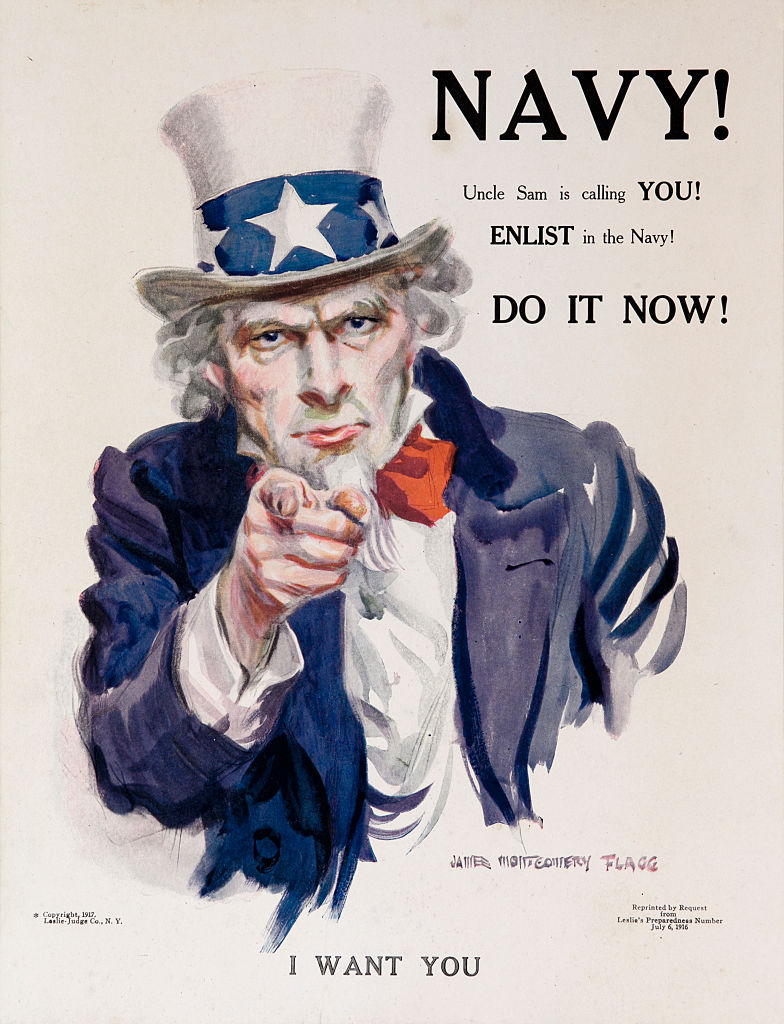
While Silicon Valley executives like those from Palantir, Meta, and OpenAI are grabbing headlines for trading their Brunello Cucinelli vests for Army Reserve uniforms, a quieter transformation has been underway in the U.S. Navy.
How? Well, the Navy’s Chief Technology Officer Justin Fanelli says he has spent the last two and a half years focused on cutting through the red tape and protracted procurement cycles that once made working with the military a nightmare for startups. The efforts represent a less visible but potentially more meaningful remaking, one where the government is moving faster and being smarter about where it’s committing dollars.
“We’re more open for business and partnerships than we’ve ever been before,” Fanelli told TechCrunch in a recent Zoom interview. “We’re humble and listening more than before, and we recognize that if an organization shows us how we can do business differently, we want that to be a partnership.”
Right now, many of these partnerships are being facilitated through what Fanelli calls the Navy’s innovation adoption kit, a series of frameworks and tools that aim to bridge the so-called Valley of Death, where promising tech dies on its path from prototype to production. “Your granddaddy’s government had a spaghetti chart for how to get in,” he said. “Now it’s a funnel, and we are saying, if you can show that you have outsized outcomes, then we want to designate you as an enterprise service.”
In one recent case, the Navy went from a Request for Proposal (RFP) to pilot deployment in under six months with Via, an eight-year-old, Somerville, Mass.-based cybersecurity startup that helps big organizations protect sensitive data and digital identities through, in part, decentralization, meaning the data isn’t stored in one central spot that can be hacked. (Another of Via’s clients is the U.S. Air Force.)
The Navy’s new approach operates on what Fanelli calls a “horizon” model, borrowed and adapted from McKinsey’s innovation framework. Companies move through three phases: evaluation, structured piloting, and scaling to enterprise services. The key difference from traditional government contracting, Fanelli says, is that the Navy now leads with problems rather than predetermined solutions.
“Instead of specifying, ‘Hey, we’d like this problem solved in a way that we’ve always had it,’ we just say we have a problem, who wants to solve this, and how will you solve it?” Fanelli said.
Fanelli’s drive to overhaul Navy tech is personal. Originally a scholarship cadet in the Air Force studying electrical engineering, he was disqualified from military service due to a lung issue. Determined to serve anyway, he chose the Navy over private sector offers more than 20 years ago because he “wanted to be around people in uniform.” Since then, his career has spanned roles across defense, intelligence, DARPA, and open source initiatives, before returning to the Department of the Navy.
The change he’s overseeing is opening doors to companies that previously never considered government work and may have thought it a waste of time to try. Fanelli points, for example, to one competition run through the Defense Innovation Unit (DIU), wherein the Navy expected a handful of bidders for a niche cybersecurity challenge but received nearly 100 responses – many from companies that had never worked with the DoD before but were already solving similar problems in the private sector.
Fanelli says his team has documented dozens of success stories altogether, including one where a venture-backed startup used robotic process automation to zip through a two-year invoice backlog in just a couple of weeks. Another example involved rolling out network improvements to an aircraft carrier that saved 5,000 sailor hours in the first month alone.
“That not just changed their availability, but it changed their morale, esprit de corps, how much time they could spend doing other tasks,” Fanelli noted, explaining that time saved is one of five metrics that the Navy uses to measure the success of a pilot program. The other four are operational resilience, cost per user, adaptability, and user experience.
As for what the Navy is looking for right now, Fanelli outlined several high-priority areas, including AI, where the service is actively talking with teams. For starters, the Navy wants to accelerate AI adoption beyond basic generative AI use cases into more agentic applications for everything from onboarding and personnel management to data processing on ships. He also cited “alternative” GPS, explaining that the Navy is quickly adopting alternative precision navigation and timing software, particularly for integration with unmanned systems. And he mentioned “legacy system modernization,” saying that some of the aging technology that the Navy is looking to modernize includes air traffic control infrastructure and ship-based systems.
So how much money is it looking to put to work each year? Fanelli said he wasn’t at liberty to provide specific budget breakdowns, but he said the Navy currently allocates single-digit percentages to emerging and commercial technology versus traditional defense contractors — a balance that he expects to evolve significantly as AI continues to advance.
As for the most common reason that promising technologies fail when trialed, he said it isn’t necessarily because of technical shortcomings. Instead, he said, the Navy operates on long budget cycles, and if a new solution doesn’t replace or “turn off” an existing system, funding becomes problematic.
“If we’re getting benefit and we’re measuring that benefit, but there’s no money [getting to the startup] in a year and a half — that’s a really bad story for their investors and our users,” Fanelli explained. “Sometimes it’s a zero sum game. Sometimes it’s not. And if we’re going to flip the public-private sector to more private and ride that wave, we do have a lot of technical debt that we need to cut anchor on.”
During our call, we also asked Fanelli if the Trump administration’s “America first” policies are impacting these processes in any way. Fanelli answered that the current focus on domestic manufacturing aligns well with the Navy’s “resilience” goals (he pointed to digital twins, additive manufacturing, and on-site production capabilities that can reduce supply chain dependencies).
Either way, the Navy’s message for entrepreneurs and investors is pretty clearly that it’s a genuine alternative to traditional commercial markets, and it’s a pitch that appears to be gaining traction in Silicon Valley, where there’s growing receptiveness to partnering with the U.S. government.
Meta’s Andrew Bosworth recently observed at a recent Bloomberg event in San Francisco: “There’s a much stronger patriotic underpinning than I think people give Silicon Valley credit for.”
As longtime industry observers can attest, it’s a marked change from the more skeptical stance that characterized much of the Valley in previous years.
Now, Fanelli hopes to attract more of that interest to the Navy specifically. He told TechCrunch, “I would invite anyone who wants to serve the greater mission from a solution perspective to lean in and to join us in this journey.”
If you’re interested in hearing our full conversation with Fanelli, you can check it out right here.
